
BhaktiSanctum
Guru of the devas
Shri Brihaspati
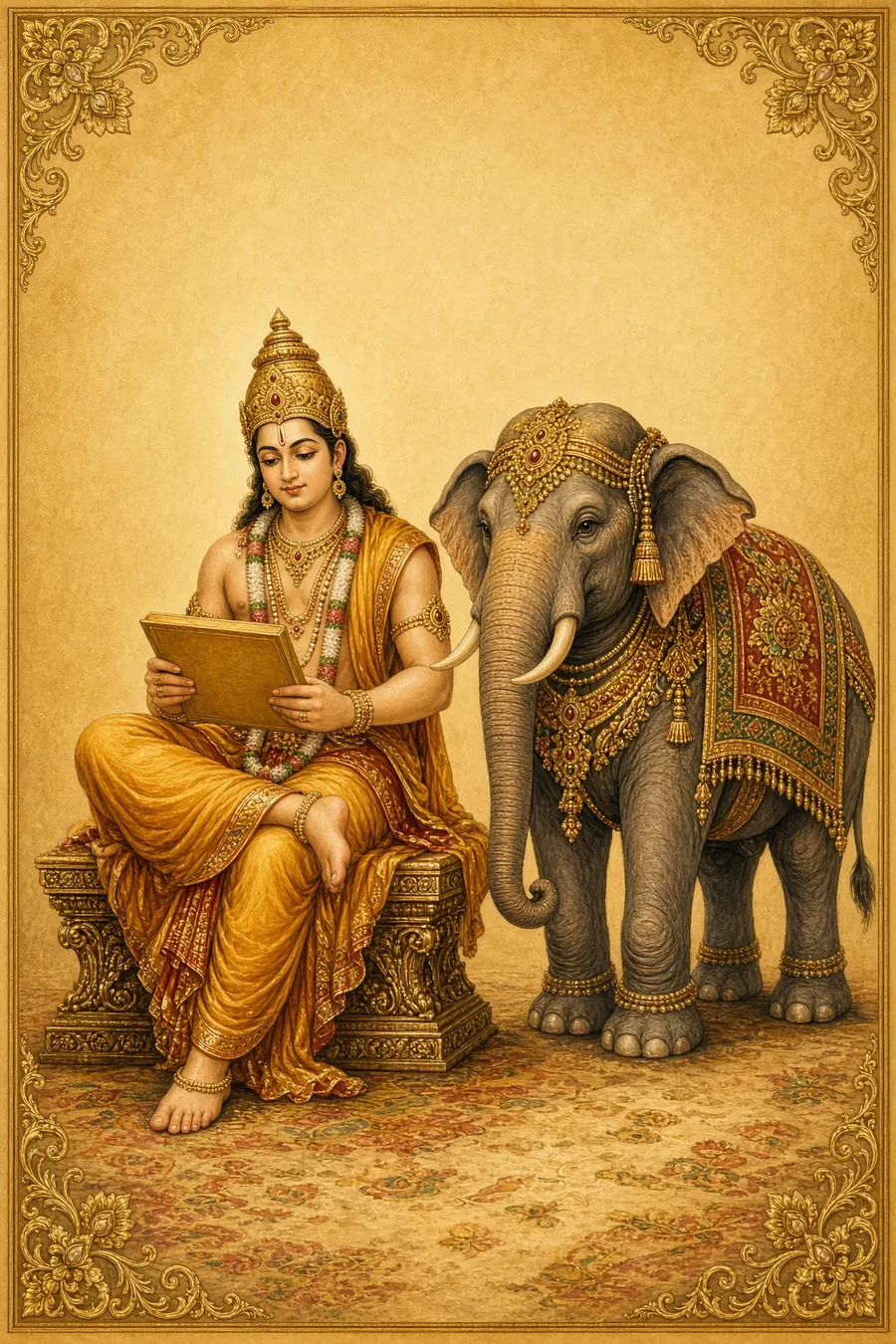
Shri Brihaspati is Jupiter in the row of nine, the teacher of the gods, yellow as turmeric and as ripe knowledge.
Katha
Thursday is guruvara, the day of the teacher. Brihaspati is the celestial name of that function. The offering is yellow because the tradition is consistent about colour, and simple because a teacher is not honoured with luxury he cannot eat. In a house, the Thursday lamp, a little dal, and a respectful memory of one's actual teachers are a complete worship. Buying a stone out of fear of a planet is not required and is not praised here.
Swaroop and meaning
Honour the teacher you actually have. A planet will not be flattered by disloyalty to a person.
- Vahana
- A chariot, or an elephant in later art.
- Weapons and signs
- A rosary and a staff of teaching.
- Consort and family
- Tara is named as his wife in the Puranas. Priest-teacher of the devas, one of the Navagraha. He is not a human guru and does not replace one.
- Colour
- Yellow
- Flower
- Marigold
- Vrat
- Thursday, the day already given to Shri Vishnu and to the guru.
- Bhog
- Yellow cloth · Chana dal · A banana · Turmeric
- Temples and tirthas
- Navagraha shrines, and any Thursday lamp.
- Festivals
- Guru Purnima belongs first to the human teacher and to Vyasa. Brihaspati may be remembered on that day without stealing it.
Mool mantra
ॐ ग्रां ग्रीं ग्रौं सः गुरवे नमः
Om Graam Greem Graum Sah Gurave Namah
Salutation to the Guru, Brihaspati.
Graha practice
The graha diagrams of the printed tradition place the beeja in a bindu inside a lotus and a square. The beeja below is the practice. A graha mantra is not a substitute for medicine, work, or a clear conscience.
A plate is shown only when this deity's own geometry is in the yantra hall. Another deity's yantra is not borrowed.
See the yantra hallPuja vidhi
A household vidhi for Shri Brihaspati. It is complete without a priest. If your family has a stricter order, follow that. This is the common gentle form.
Samagri: A clean cloth for the seat, A lamp and oil or ghee, Incense, Water in a small vessel, Flowers, Yellow cloth, Chana dal, A banana, Turmeric.
Prepare the place
Sweep a small corner. Lay the cloth. Set a picture or a simple mark of Shri Brihaspati. Bathe, or at least wash face, hands, and feet. Sit facing east or north if the room allows.
Sankalpa
Say your name quietly, the weekday, and the intention: "I offer this puja to Shri Brihaspati for the welfare of this house." A sankalpa is a sentence, not a speech.
Light the lamp
Light the lamp and incense. Offer the flame first. If the air is close, keep the incense short. The lamp can stay.
Invocation
Join the palms. Say श्री बृहस्पति and the mantra from the mantra hall (guru beeja). Invite Shri Brihaspati as a guest, not as a force to be used.
Offerings
Offer water, then flowers, then the foods of this deity: Yellow cloth, Chana dal, A banana, Turmeric. What you will eat later, offer first. Do not offer anything you would not serve a person you respect.
Japa
Repeat the mantra 11, 28, or 108 times. Use the japa room of this app if you wish. One round done with attention is better than five done to finish.
Aarti and closing
Circle the lamp clockwise, three or seven times, if an aarti is in the mantra hall. Bow. Ask forgiveness for what was hurried. Share the offered food. Leave the seat as clean as you found it.
Copied stotras and names
- बृहस्पति चालीसाबृहस्पति चालीसाChalisas · 25 verses
- श्री बृहस्पति देव की आरतीजय वृहस्पति देवा, ऊँ जय वृहस्पति देवाAartis · 15 verses
- बृहस्पति अष्टोत्तर शत नाम स्तोत्रम्गुरुर्गुणवरो गोप्ता गोचरो गोपतिप्रियःNames · 51 verses
- बृहस्पति अष्टोत्तर शत नामावलिॐ गुरवे नमःNames · 111 verses
- बृहस्पति कवचम् (गुरु कवचम्)अस्य श्रीबृहस्पति कवचमहा मन्त्रस्य, ईश्वर ऋषिः,Kavach · 22 verses