
BhaktiSanctum
The young teacher under the banyan
Shri Dakshinamurti
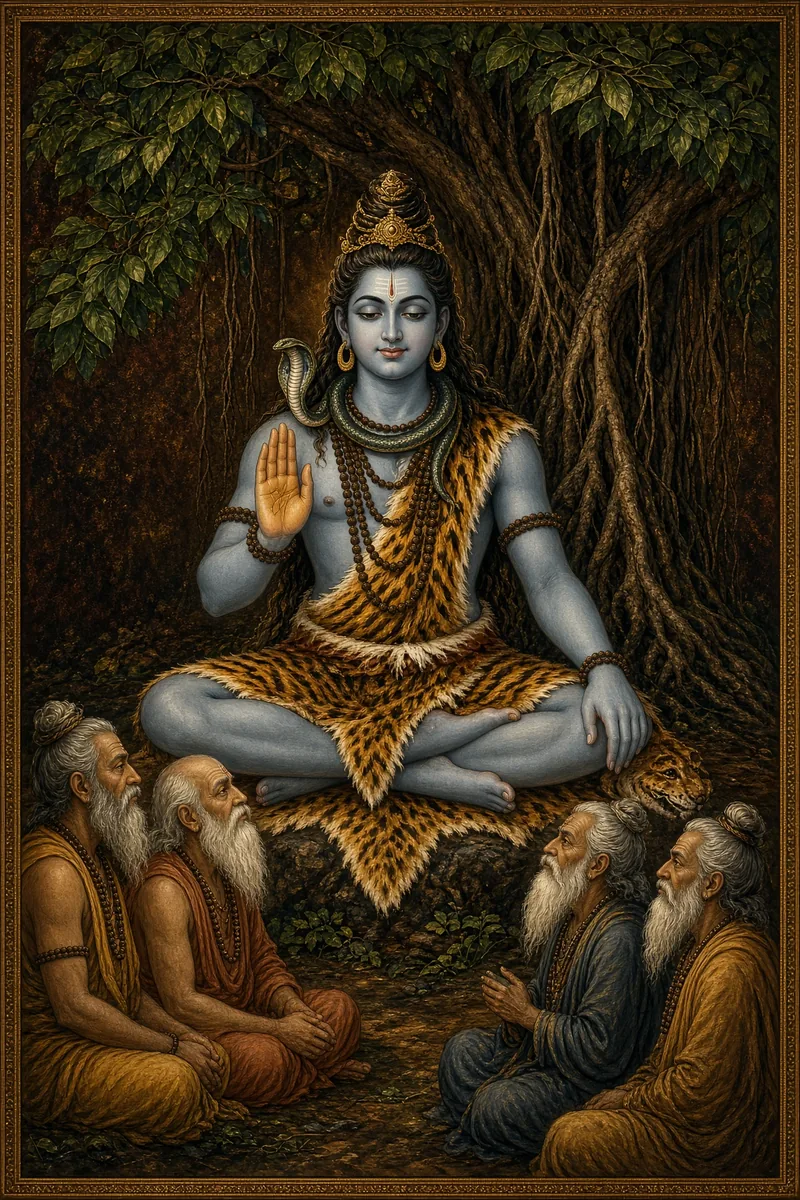
Shri Dakshinamurti teaches without a speech. The pupils are old. The guru is young.
Katha
Under a banyan, facing south, Bhagwan Shri Shiva sits. Sanaka and his brothers sit at his feet. The joined thumb and finger say that the person and the truth are not two reports. Shankara's Dakshinamurti stotra is the hymn of this silence. Silence here is a full teaching.
Swaroop and meaning
A book opened in front of him becomes worship. Pride in being learned is the thing he does not bless.
- Vahana
- Seated. The banyan is the throne.
- Weapons and signs
- Chinmudra, fire, a book.
- Consort and family
- Taught in silence. He remains the husband of Maa Parvati. Bhagwan Shri Shiva as guru.
- Colour
- Ash and leaf green
- Flower
- Bilva
- Vrat
- Thursday.
- Bhog
- Bilva · A book placed with respect · Water
- Temples and tirthas
- The south wall of many Shiva temples, facing south.
- Festivals
- Guru Purnima and Maha Shivaratri.
Mool mantra
गुरुर्ब्रह्मा गुरुर्विष्णुः गुरुर्देवो महेश्वरः । गुरुः साक्षात् परं ब्रह्म तस्मै श्रीगुरवे नमः ॥
Gurur brahma gurur vishnuh gurur devo maheshvarah. Guruh sakshat param brahma tasmai shri gurave namah.
The guru is Brahma, Vishnu, and Shiva. The guru is the supreme directly. I bow to that teacher.
Yantra of Bhagwan Shri Shiva
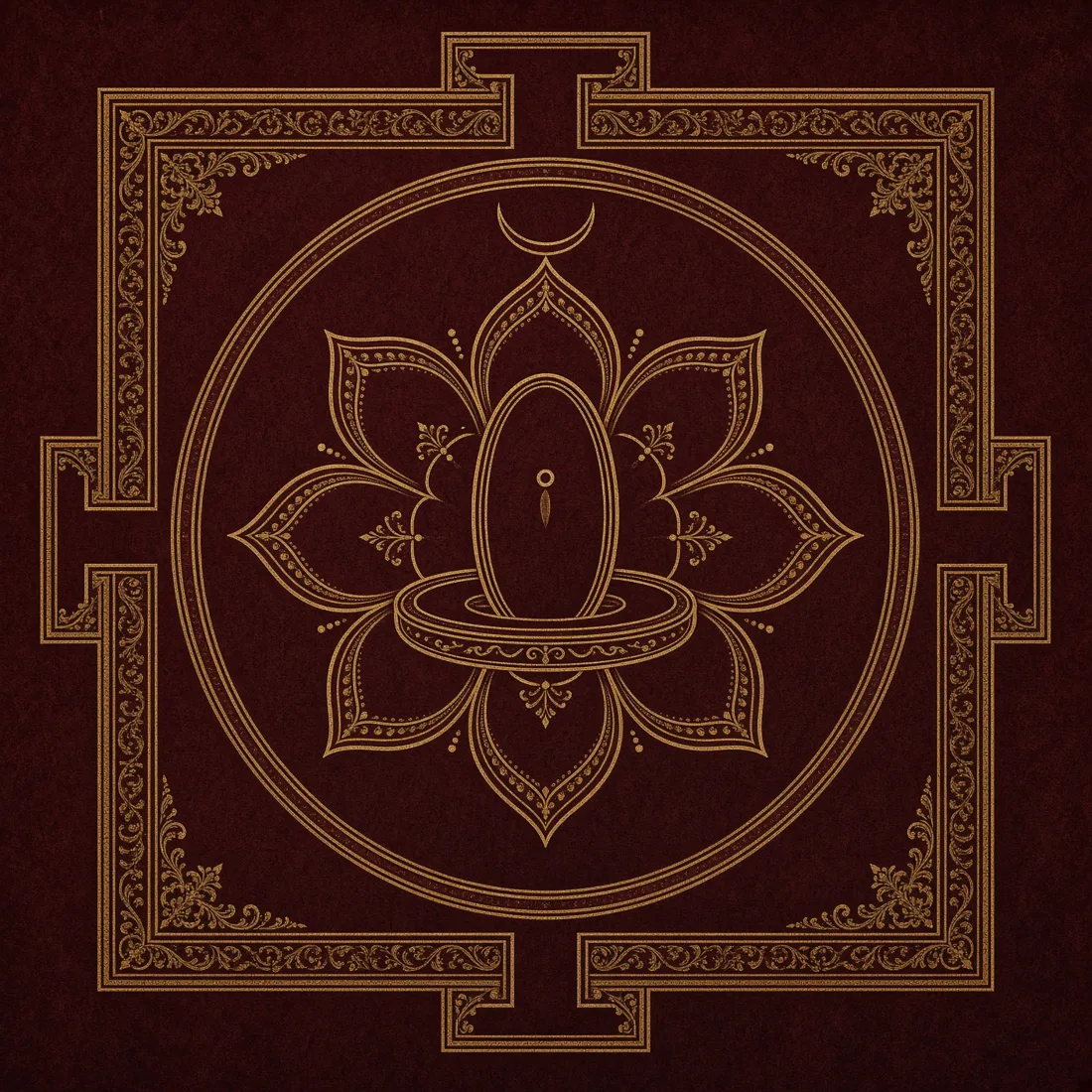
Bhupura with four gates, eight lotus petals, the linga seated on the yoni, the crescent, and the bindu. The twelve Jyotirlingas are twelve seats of this same Lord, so they keep this yantra and not twelve others.
ॐ नमः शिवाय ॥
Om Namah Shivaya.
Place it facing east or north. Monday and Shivaratri are the days the house already knows.
Water, bel, a white flower, bhasma if the house keeps it, and the five-syllable mantra.
The phala named with this yantra is the peace of the auspicious one, the same Lord who holds the poison and the river.
See the yantra hallPuja vidhi
A household vidhi for Shri Dakshinamurti. It is complete without a priest. If your family has a stricter order, follow that. This is the common gentle form.
Samagri: A clean cloth for the seat, A lamp and oil or ghee, Incense, Water in a small vessel, Flowers, Bilva, A book placed with respect, Water.
Prepare the place
Sweep a small corner. Lay the cloth. Set a picture or a simple mark of Shri Dakshinamurti. Bathe, or at least wash face, hands, and feet. Sit facing east or north if the room allows.
Sankalpa
Say your name quietly, the weekday, and the intention: "I offer this puja to Shri Dakshinamurti for the welfare of this house." A sankalpa is a sentence, not a speech.
Light the lamp
Light the lamp and incense. Offer the flame first. If the air is close, keep the incense short. The lamp can stay.
Invocation
Join the palms. Say श्री दक्षिणामूर्ति and the mantra from the mantra hall (guru brahma). Invite Shri Dakshinamurti as a guest, not as a force to be used.
Offerings
Offer water, then flowers, then the foods of this deity: Bilva, A book placed with respect, Water. What you will eat later, offer first. Do not offer anything you would not serve a person you respect.
Japa
Repeat the mantra 11, 28, or 108 times. Use the japa room of this app if you wish. One round done with attention is better than five done to finish.
Aarti and closing
Circle the lamp clockwise, three or seven times, if an aarti is in the mantra hall. Bow. Ask forgiveness for what was hurried. Share the offered food. Leave the seat as clean as you found it.
Copied stotras and names
- दक्षिणामूर्थि द्वादश नाम स्तोत्रम्अथ दक्षिणामूर्तिद्वादशनामस्तोत्रंStotras · 9 verses
- दक्षिणा मूर्ति स्तोत्रम्ॐ यो ब्रह्माणं विदधाति पूर्वंStotras · 68 verses
- मेधा दक्षिणामूर्थि त्रिशति नामावलिॐ ओङ्काररूपाय नमःNames · 301 verses
- श्री दक्षिणामूर्थि अष्टोत्तर शत नाम स्तोत्रम्व्याख्यारुद्राक्षमाले कलशसुरभिते बाहुभिर्वामपादंNames · 40 verses
- श्री दक्षिणामूर्थि अष्टोत्तर शत नामावलिःॐ विद्यारूपिणे नमःNames · 109 verses
- श्री दक्षिणामूर्ति कवचं (रुद्रयामल)नमस्तेऽस्तु त्रयीनाथ परमानन्दकारकKavach · 41 verses
- श्री दक्षिणामूर्थि सहस्रनाम स्तोत्रम्श्री दक्षिणामूर्थि सहस्रनाम स्तोत्रम्Names · 398 verses
- श्री दक्षिणामूर्थि सहस्र नामावलिॐ देवदेवाय नमःNames · 1001 verses
- श्री दक्षिणामूर्त्यष्टकम् २ (व्यास कृतम्)श्री दक्षिणामूर्त्यष्टकम् २ (व्यास कृतम्)Ashtakams · 35 verses
- श्री दक्षिणामूर्त्यष्टकम् ३ (नृसिंहभारती कृत)श्री दक्षिणामूर्त्यष्टकम् ३ (नृसिंहभारती कृत)Ashtakams · 35 verses
- श्री दक्षिणामूर्त्यष्टकम् ४ (वृषभदेव कृत)श्री दक्षिणामूर्त्यष्टकम् ४ (वृषभदेव कृत)Ashtakams · 39 verses
- श्री दक्षिणामूर्ति दण्डकम्श्री दक्षिणामूर्ति दण्डकम्Stotras · 3 verses
- श्री दक्षिणामूर्ति दशकम्श्री दक्षिणामूर्ति दशकम्Stotras · 42 verses
- श्री दक्षिणामूर्ति कवचम् (त्रैलोक्यसम्मोहनम्)गङ्गाधरं शशिधरं उमाकान्तं जगत्प्रभुम्Kavach · 211 verses
- श्री दक्षिणामूर्ति मालामन्त्र स्तवम्श्री दक्षिणामूर्ति मालामन्त्र स्तवम्Stotras · 93 verses
- श्री दक्षिणामूर्ति मानसिक पूजा स्तोत्रम्श्री दक्षिणामूर्ति मानसिक पूजा स्तोत्रम्Stotras · 55 verses
- श्री दक्षिणामूर्ति मन्त्र कवचम्श्री दक्षिणामूर्ति मन्त्र कवचम्Kavach · 15 verses
- श्री दक्षिणामूर्ति मन्त्रार्णाष्टोत्तरशतनाम स्तोत्रम्श्रीदेव् युवाचNames · 71 verses
- श्री दक्षिणामूर्ति मन्त्रार्णाष्टोत्तरशतनामावलीश्री दक्षिणामूर्ति मन्त्रार्णाष्टोत्तरशतनामावलीNames · 110 verses
- श्री दक्षिणामूर्ति मनुसुवर्णमाला स्तोत्रम्श्री दक्षिणामूर्ति मनुसुवर्णमाला स्तोत्रम्Stotras · 55 verses
- श्री दक्षिणास्य नक्षत्रमाला स्तोत्रम्श्री दक्षिणास्य नक्षत्रमाला स्तोत्रम्Stotras · 114 verses
- श्री दक्षिणामूर्ति नवमणिमाला स्तोत्रम्श्री दक्षिणामूर्ति नवमणिमाला स्तोत्रम्Stotras · 42 verses
- श्री दक्षिणामूर्ति नवरत्नमाला स्तोत्रम्श्री दक्षिणामूर्ति नवरत्नमाला स्तोत्रम्Stotras · 38 verses
- श्री दक्षिणामूर्ति पञ्चरत्न स्तवम्श्री दक्षिणामूर्ति पञ्चरत्न स्तवम्Stotras · 28 verses
- श्री दक्षिणामूर्ति पञ्जरम्श्री दक्षिणामूर्ति पञ्जरम्Stotras · 106 verses
- श्री दक्षिणामूर्ति सहस्रनाम स्तोत्रम्श्री दक्षिणामूर्ति सहस्रनाम स्तोत्रम्Names · 371 verses
- श्री दक्षिणामूर्ति वर्णमाला स्तोत्रम्श्री दक्षिणामूर्ति वर्णमाला स्तोत्रम्Stotras · 103 verses
- श्री मेधा दक्षिणामूर्ति मन्त्रवर्णपद स्तुतिःओमित्येकाक्षरं ब्रह्म व्याहरन्ति त्रयश्शिखाःStotras · 49 verses
- Dakshinamurti Stotramदक्षिणामूर्तिस्तोत्रम्Stotras · 10 verses