BhaktiSanctum

The three as one

Shri Dattatreya

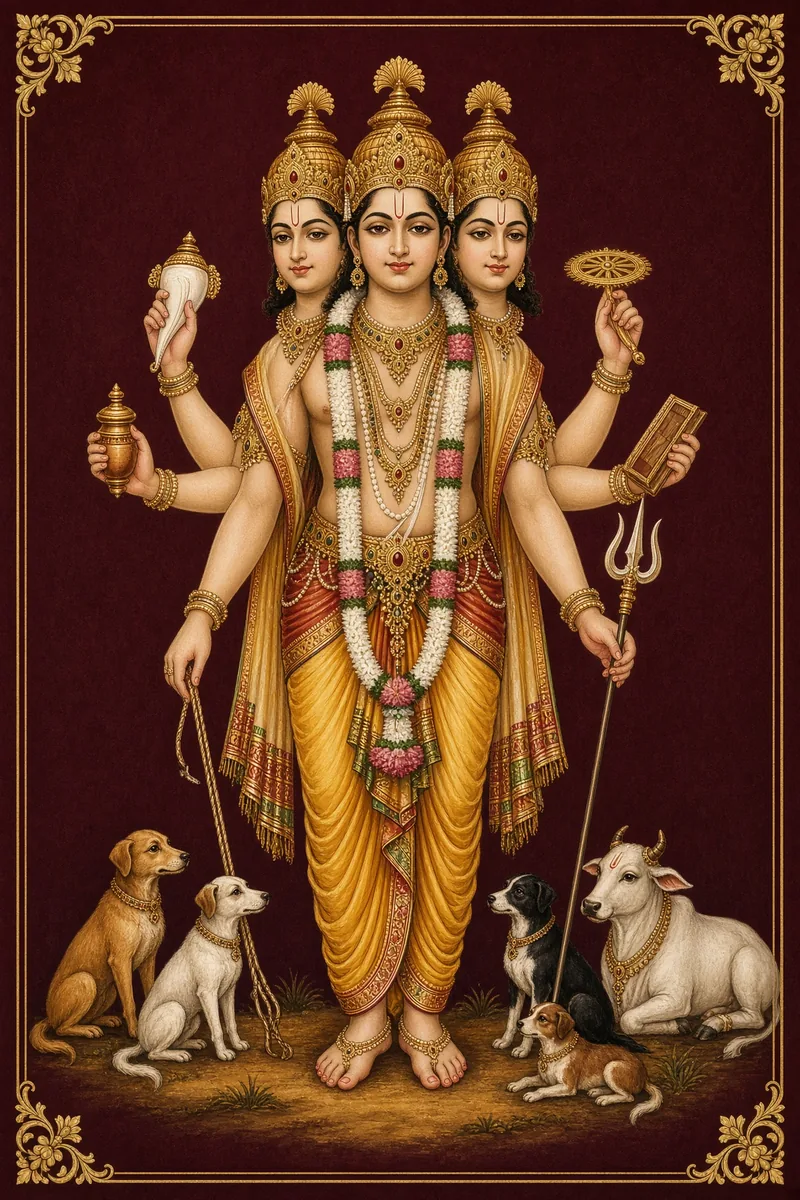
Darshan of Shri Dattatreya, full figure
Offer in the mandir

Shri Dattatreya is worshipped as Shri Brahma, Shri Vishnu, and Bhagwan Shri Shiva in a single body.

Katha

The Puranas receive Shri Dattatreya as the son of Shri Atri and Maa Anasuya, the rishi in whom Shri Brahma, Shri Vishnu, and Bhagwan Shri Shiva answered a single prayer. He is painted with three heads and six arms, dogs at his feet and the cow beside him: the household of a guru who owns nothing. The Deccan reads him in the Guru Charitra and meets him again in Shri Nrusimha Saraswati, Shri Swami Samarth, and the other seats kept in the sant shrine, which is not mixed with this page. Datta Jayanti is kept by many on Margashirsha Purnima. Confirm the tithi locally before a strict fast. He is the guru who refuses a personality cult.

Swaroop and meaning

He is the guru who refuses a personality cult. The verse Guru Brahma belongs beside him.

Vahana
None. The cow walks with him. Four dogs sit at his feet.
Weapons and signs
The signs of the trimurti: trident, discus, and the rest, because he is the three.
Consort and family
None in the renunciate form. Told as the son of Atri and Anasuya, and as Brahma, Vishnu, and Shiva in one body.
Colour
Saffron
Flower
Any simple flower
Vrat
Thursday and Datta Jayanti.
Bhog
Saffron cloth · Fruit · A lamp · Food given away
Temples and tirthas
Ganagapur, and the Datta houses of the Deccan.
Festivals
Datta Jayanti.

Mool mantra

ॐ द्रां दत्तात्रेयाय नमः

Om Dram Dattatreyaya Namah

Om. Salutation to Dattatreya, with the seed-sound Dram.

Chant mantra

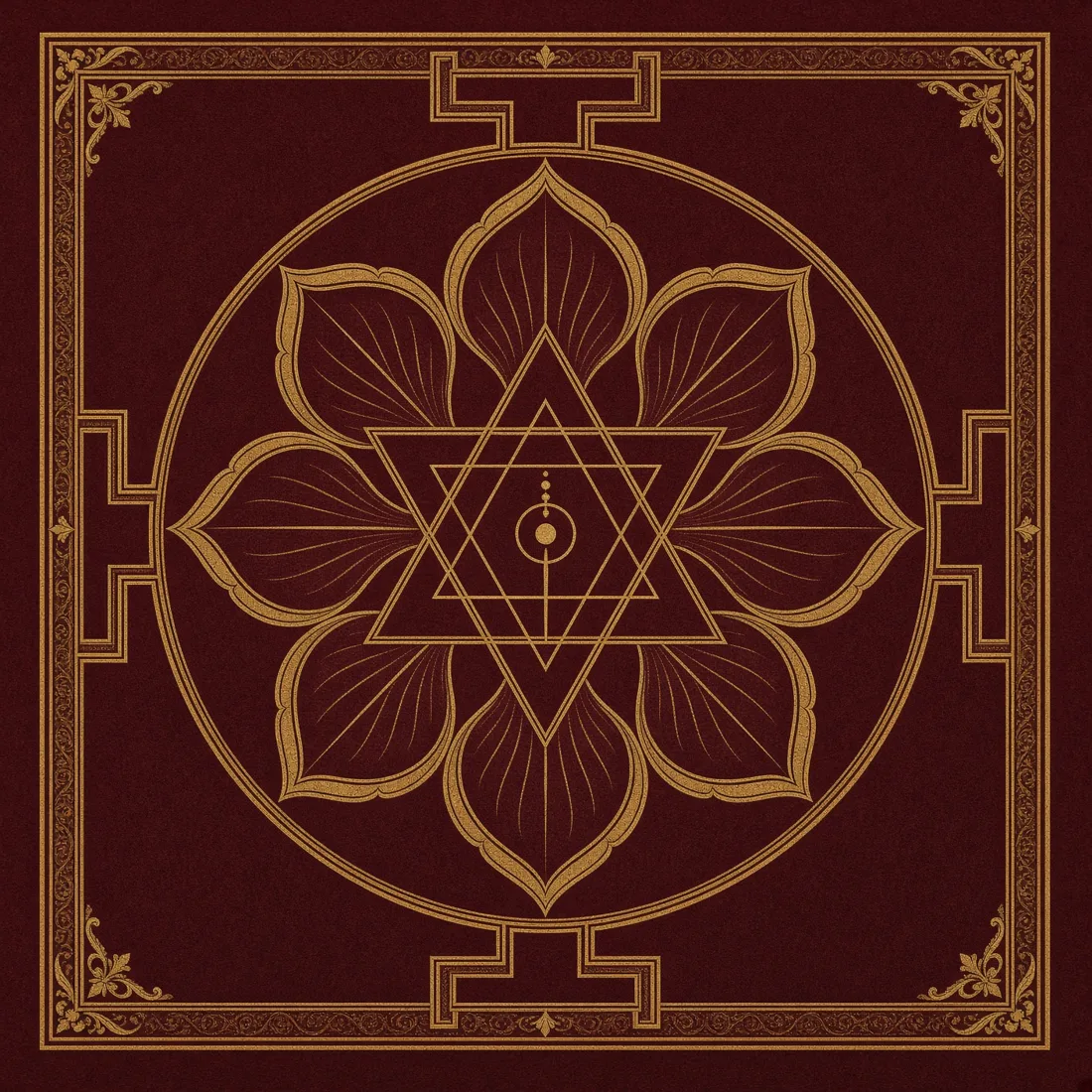
Yantra of Shri Vishnu

Yantra of Shri Vishnu

Bhupura with four gates, eight lotus petals, the shatkona, and the vertical mark with the bindu. The avataras keep this yantra because they are this same Bhagwan.

ॐ नमो नारायणाय ॥

Om Namo Narayanaya.

Place it where the tulsi and the lamp already stand. Thursday is the day many houses choose.

Tulsi, a yellow flower, water, and the eight-syllable mantra or Om Namo Narayanaya.

The tradition calls this the seat of the Preserver. The fruit is remembrance of him.

See the yantra hall

Puja vidhi

A household vidhi for Shri Dattatreya. It is complete without a priest. If your family has a stricter order, follow that. This is the common gentle form.

Samagri: A clean cloth for the seat, A lamp and oil or ghee, Incense, Water in a small vessel, Flowers, Saffron cloth, Fruit, A lamp, Food given away.

  1. Prepare the place

    Sweep a small corner. Lay the cloth. Set a picture or a simple mark of Shri Dattatreya. Bathe, or at least wash face, hands, and feet. Sit facing east or north if the room allows.

  2. Sankalpa

    Say your name quietly, the weekday, and the intention: "I offer this puja to Shri Dattatreya for the welfare of this house." A sankalpa is a sentence, not a speech.

  3. Light the lamp

    Light the lamp and incense. Offer the flame first. If the air is close, keep the incense short. The lamp can stay.

  4. Invocation

    Join the palms. Say श्री दत्तात्रेय and the mantra from the mantra hall (om dram datta). Invite Shri Dattatreya as a guest, not as a force to be used.

  5. Offerings

    Offer water, then flowers, then the foods of this deity: Saffron cloth, Fruit, A lamp, Food given away. What you will eat later, offer first. Do not offer anything you would not serve a person you respect.

  6. Japa

    Repeat the mantra 11, 28, or 108 times. Use the japa room of this app if you wish. One round done with attention is better than five done to finish.

  7. Aarti and closing

    Circle the lamp clockwise, three or seven times, if an aarti is in the mantra hall. Bow. Ask forgiveness for what was hurried. Share the offered food. Leave the seat as clean as you found it.

Begin Puja

Mantras, stotras, and names in full

Shorter texts kept in the hall are written out here. The longer copies from Sanskrit Wikisource are linked, with their real line counts.

Guru Brahma

Mantras · 1 verse, complete

The verse that remembers the teacher as the tradition, not as a personality cult.

गुरुर्ब्रह्मा गुरुर्विष्णुः गुरुर्देवो महेश्वरः । गुरुः साक्षात् परं ब्रह्म तस्मै श्रीगुरवे नमः ॥

Gurur brahma gurur vishnuh gurur devo maheshvarah. Guruh sakshat param brahma tasmai shri gurave namah.

The guru is Brahma, Vishnu, and Shiva. The guru is the supreme directly. I bow to that teacher.

Chant in the hall

Datta Gayatri

Mantras · 1 verse, complete

A gayatri used in Datta households.

ॐ दिगम्बराय विद्महे योगीश्वराय धीमहि । तन्नो दत्तः प्रचोदयात् ॥

Om digambaraya vidmahe yogishvaraya dhimahi. Tanno Dattah prachodayat.

We know the sky-clad one. We meditate on the lord of yogis. May Datta inspire us.

Chant in the hall

Jai Jai Datta Digambara

Aartis · 4 verses, complete

The Deccan aarti. Three heads, dogs at the heel, and no interest in costume.

जय जय दत्त दिगंबर, जय जय स्वामी दिगंबर ॥

Jaya jaya Datta Digambara, jaya jaya Swami Digambara.

Victory to Datta the sky-clad. Victory to the master who owns no walls.

त्रिगुणात्मक त्रैमूर्ति रूपं, ब्रह्म विष्णु महेश्वर ॥

Trigunatmaka traimurti rupam, Brahma Vishnu Maheshvara.

Of the three qualities, in the form of the three: Brahma, Vishnu, and Shiva.

अत्रि अनसूया नंदन, श्रीपाद वल्लभ शंकर ॥

Atri Anasuya nandana, Shripada Vallabha Shankara.

Joy of Atri and Anasuya. Shripad, Vallabha, Shankara — the names the tradition loves.

भक्त जनों के संकट हर्ता, अवधूत चिंतन केवल ॥

Bhakta janon ke sankata harta, avadhuta chintana kevala.

He takes the knot from the devotee. The avadhuta's thought is only this.

Chant in the hall

20 Names of Dattatreya

Names · 20 verses, complete

A namavali for japa. Orders differ by family and sampradaya. Chant the pronunciation you were given. Each name here is a traditional epithet, with a plain English sense.

दत्तात्रेय

Dattatreya

The one given to Atri

दत्त

Datta

The given

अवधूत

Avadhuta

The shaken-free

दिगम्बर

Digambara

Sky-clad

योगीश्वर

Yogishvara

Lord of yogis

अत्रिनन्दन

Atrinandana

Joy of Atri

अनसूयानन्दन

Anasuyanandana

Joy of Anasuya

त्रिमूर्ति

Trimurti

The three in one

श्रीपाद

Shripada

Holy feet, a Deccan form

वल्लभ

Vallabha

The dear

नृसिंहसरस्वती

Nrisimha Saraswati

A later walking of the same current

स्वामी समर्थ

Swami Samarth

The capable master, Akkalkot

देवदेव

Devadeva

God of gods

भक्तपराधीन

Bhaktaparadhina

Bound by the devotee

गुरु

Guru

The teacher

आनन्द

Ananda

Joy

स्मृति

Smriti-da

Giver of memory

शान्ता

Shanta-rupa

The calm form

कापालिक

Kapalika

Beyond costume

अलक्ष्य

Alakshya

Hard to pin down

Chant in the hall

Copied stotras and names

Festivals

Read Katha