
BhaktiSanctum
The horse-headed lord of learning
Shri Hayagriva
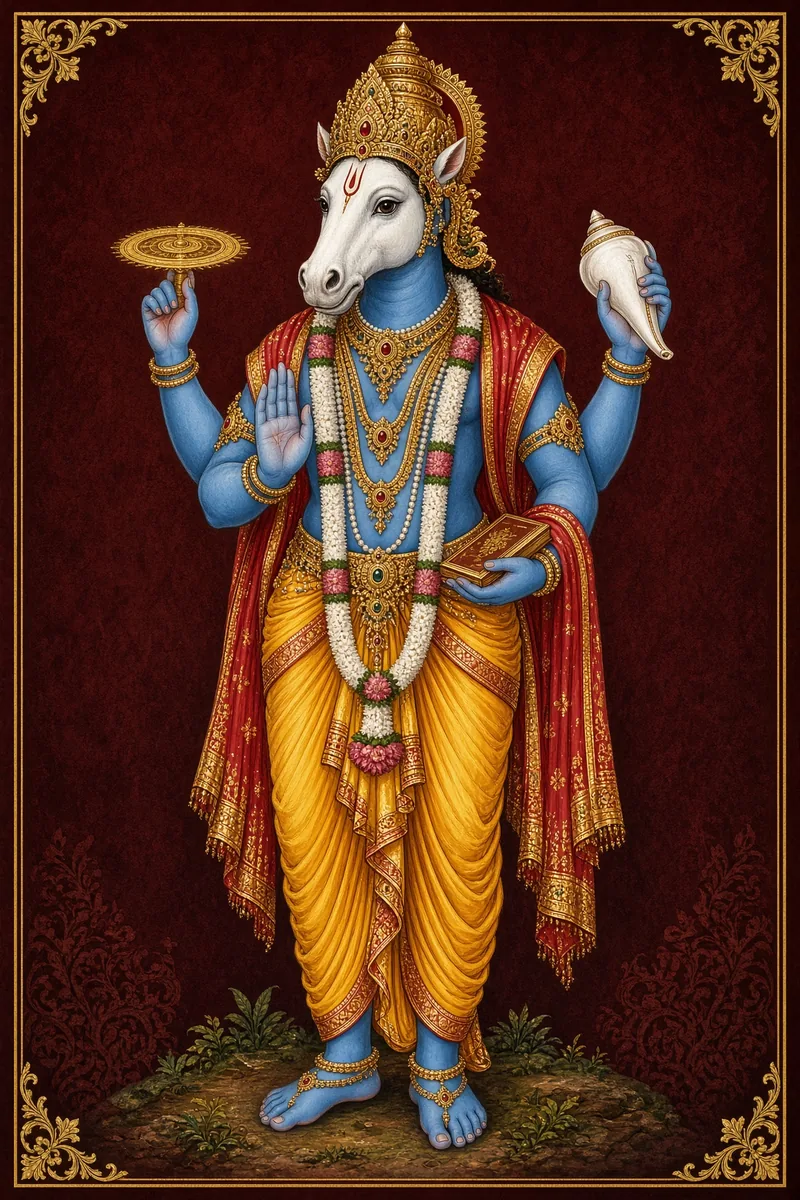
Shri Hayagriva is Shri Vishnu as the guardian of the Veda and of every honest student.
Katha
The tradition says the Veda, once stolen, was brought back by the Lord in a horse's head, a form swift and clear. Students in the south write his name at the top of a slate. He is not a rival of Maa Saraswati. Learning has more than one guardian, and they do not quarrel.
Swaroop and meaning
Begin study by bowing. End it by not using what you learned to humiliate.
- Vahana
- None required. The horse's head is the form.
- Weapons and signs
- Book, conch, discus, and the jnana mudra.
- Consort and family
- Worshipped often beside Maa Lakshmi or beside Maa Saraswati's learning. A form of Shri Vishnu, beloved where study is the vocation.
- Colour
- White and gold
- Flower
- White lotus
- Vrat
- Thursday, before study.
- Bhog
- A book · White sweets · A lamp
- Temples and tirthas
- Famous in the Sri Vaishnava south, and wherever students keep him.
- Festivals
- His jayanti follows the temple panchang.
Mool mantra
ॐ नमो नारायणाय
Om Namo Narayanaya
Om. Salutation to Narayana, the one in whom all rest.
Yantra of Shri Vishnu
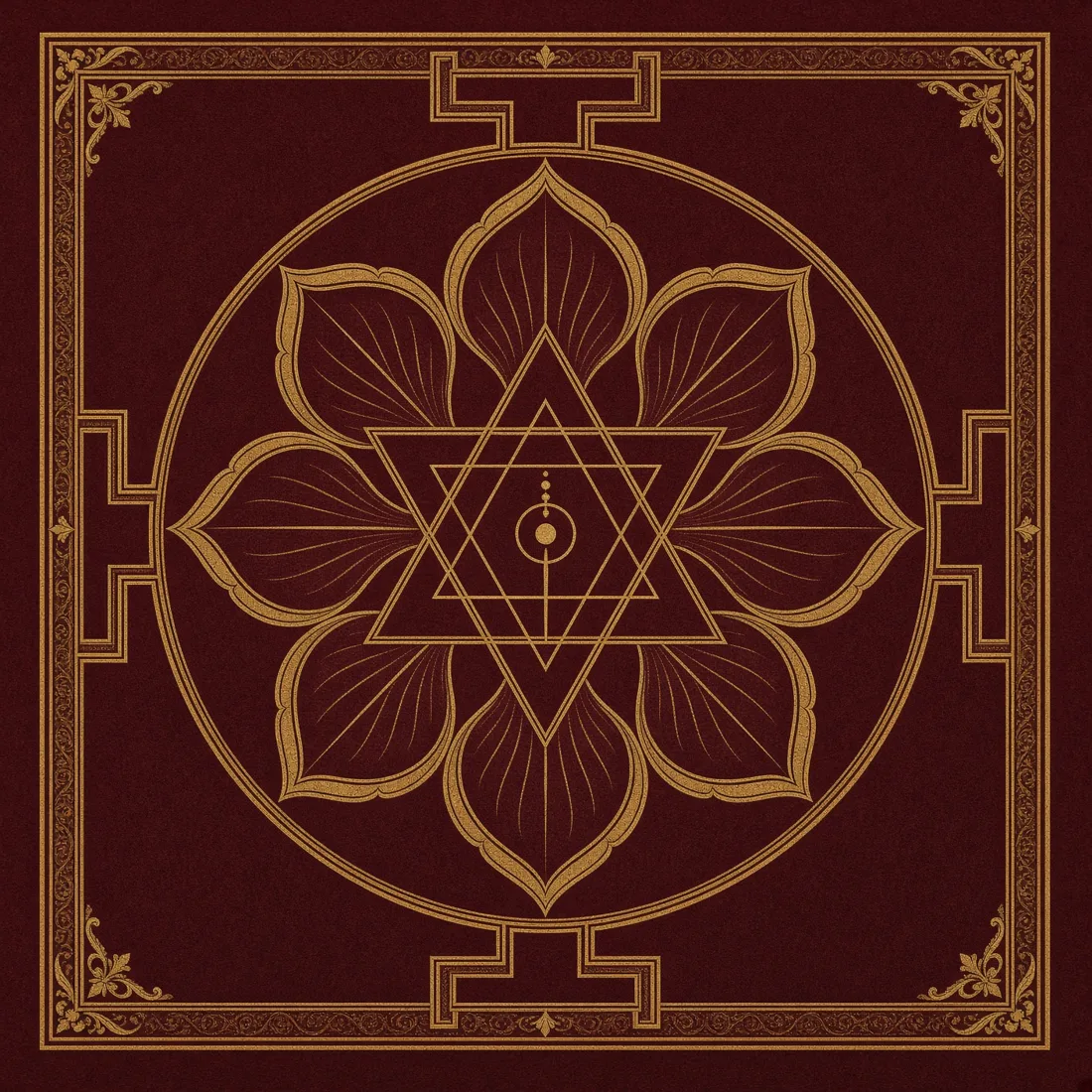
Bhupura with four gates, eight lotus petals, the shatkona, and the vertical mark with the bindu. The avataras keep this yantra because they are this same Bhagwan.
ॐ नमो नारायणाय ॥
Om Namo Narayanaya.
Place it where the tulsi and the lamp already stand. Thursday is the day many houses choose.
Tulsi, a yellow flower, water, and the eight-syllable mantra or Om Namo Narayanaya.
The tradition calls this the seat of the Preserver. The fruit is remembrance of him.
See the yantra hallPuja vidhi
A household vidhi for Shri Hayagriva. It is complete without a priest. If your family has a stricter order, follow that. This is the common gentle form.
Samagri: A clean cloth for the seat, A lamp and oil or ghee, Incense, Water in a small vessel, Flowers, A book, White sweets, A lamp.
Prepare the place
Sweep a small corner. Lay the cloth. Set a picture or a simple mark of Shri Hayagriva. Bathe, or at least wash face, hands, and feet. Sit facing east or north if the room allows.
Sankalpa
Say your name quietly, the weekday, and the intention: "I offer this puja to Shri Hayagriva for the welfare of this house." A sankalpa is a sentence, not a speech.
Light the lamp
Light the lamp and incense. Offer the flame first. If the air is close, keep the incense short. The lamp can stay.
Invocation
Join the palms. Say श्री हयग्रीव and the mantra from the mantra hall (om namo narayanaya). Invite Shri Hayagriva as a guest, not as a force to be used.
Offerings
Offer water, then flowers, then the foods of this deity: A book, White sweets, A lamp. What you will eat later, offer first. Do not offer anything you would not serve a person you respect.
Japa
Repeat the mantra 11, 28, or 108 times. Use the japa room of this app if you wish. One round done with attention is better than five done to finish.
Aarti and closing
Circle the lamp clockwise, three or seven times, if an aarti is in the mantra hall. Bow. Ask forgiveness for what was hurried. Share the offered food. Leave the seat as clean as you found it.
Copied stotras and names
- श्री हयग्रीव अष्टोत्तरशतनामावलीश्री हयग्रीव अष्टोत्तरशतनामावलीNames · 113 verses
- श्री हयग्रीव कवचम् (अथर्ववेद मन्त्रखण्ड)श्री हयग्रीव कवचम् (अथर्ववेद मन्त्रखण्ड)Kavach · 46 verses
- श्री हयग्रीव सहस्र नाम स्तोत्रम्शुक्लाम्बरधरं विष्णुं शशिवर्णं चतुर्भुजंNames · 500 verses
- श्री हयग्रीव सम्पदा स्तोत्रम्ज्ञानानन्दमयं देवं निर्मलस्फटिकाकृतिंStotras · 11 verses
- श्री हयग्रीव स्तोत्रम्ज्ञानानन्दमयं देवं निर्मलस्फटिकाकृतिंStotras · 128 verses