
BhaktiSanctum
The seventh night, dark and protective
Maa Kalaratri
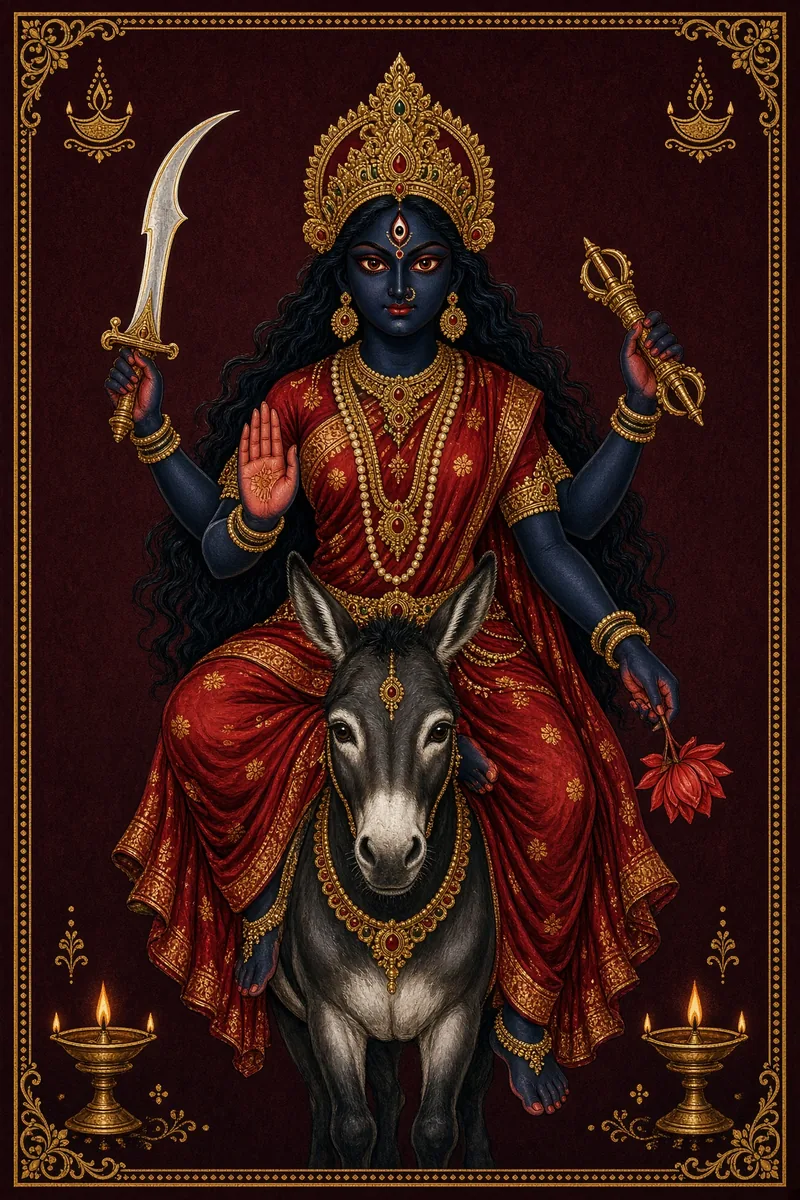
Maa Kalaratri is the Mother on the seventh night, darkness used as a shield and not as a threat.
Katha
Her dhyana is fierce: dark, with a sword, riding a donkey, hair open. The story of the night is that fear itself can be made to serve. Households that love this form still keep the lamp small and the speech clean. Children are not told horror. They are told that the Mother walks the night so the house may sleep. The mantra remains Om Dum Durgayei Namah.
Swaroop and meaning
If a form increases cruelty in the mind, it has been misunderstood. This night is for courage.
- Vahana
- A donkey, in the widely printed dhyana of this night.
- Weapons and signs
- A sword and a hook among four arms. The gesture of fearlessness is the one to remember.
- Consort and family
- She is the Mother. This night is not a separate goddess from Maa Durga. Seventh of the Navadurga.
- Colour
- Night-blue and flame
- Flower
- Red hibiscus
- Vrat
- Seventh night. Keep it gentle if the mind is already frightened.
- Bhog
- A mustard-oil lamp · Jaggery · Red flowers
- Temples and tirthas
- The Navaratri altar at home, and the temples that dress the Mother in this form for one night.
- Festivals
- Sharada Navaratri, night seven.
Mool mantra
ॐ दुं दुर्गायै नमः
Om Dum Durgayei Namah
Om. Salutation to Durga, with the seed-sound Dum.
Yantra of Maa Durga
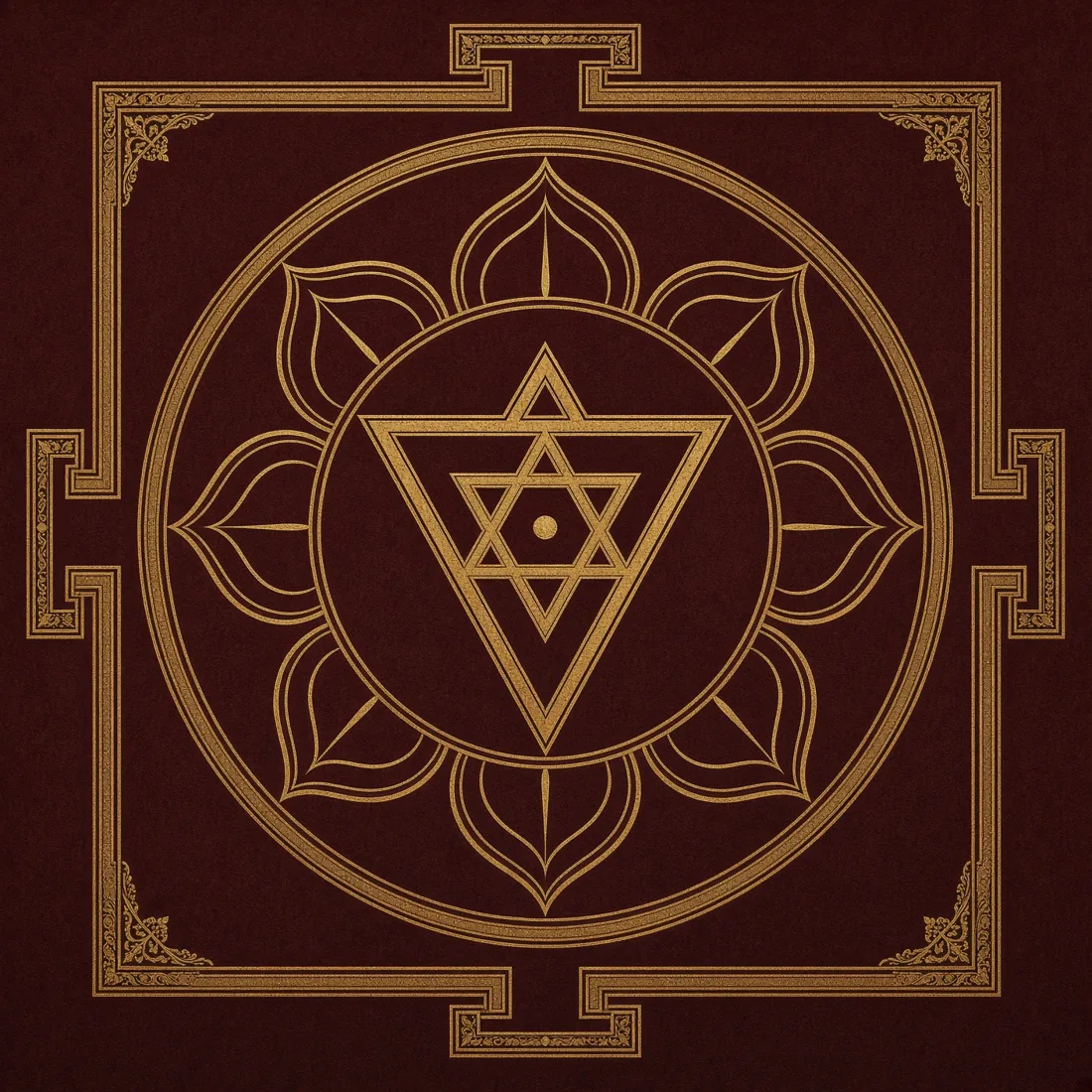
Bhupura with four gates, eight lotus petals, and the downward triangle holding the inner star and the bindu. This is not the yantra of Maa Lakshmi and not the yantra of Maa Kali.
ॐ दुं दुर्गायै नमः ॥
Om Dum Durgayai Namah.
Place it for the nine nights, or on a Tuesday or Friday, with a lamp that stays till the reading is done.
Red flower, kumkum, and the bija. Name the night's form if the vow is Navaratri.
The Devi Mahatmya asks her protection against adharma. That is the fruit named here.
See the yantra hallPuja vidhi
A household vidhi for Maa Kalaratri. It is complete without a priest. If your family has a stricter order, follow that. This is the common gentle form.
Samagri: A clean cloth for the seat, A lamp and oil or ghee, Incense, Water in a small vessel, Flowers, A mustard-oil lamp, Jaggery, Red flowers.
Prepare the place
Sweep a small corner. Lay the cloth. Set a picture or a simple mark of Maa Kalaratri. Bathe, or at least wash face, hands, and feet. Sit facing east or north if the room allows.
Sankalpa
Say your name quietly, the weekday, and the intention: "I offer this puja to Maa Kalaratri for the welfare of this house." A sankalpa is a sentence, not a speech.
Light the lamp
Light the lamp and incense. Offer the flame first. If the air is close, keep the incense short. The lamp can stay.
Invocation
Join the palms. Say माँ कालरात्रि and the mantra from the mantra hall (om dum durgayei). Invite Maa Kalaratri as a guest, not as a force to be used.
Offerings
Offer water, then flowers, then the foods of this deity: A mustard-oil lamp, Jaggery, Red flowers. What you will eat later, offer first. Do not offer anything you would not serve a person you respect.
Japa
Repeat the mantra 11, 28, or 108 times. Use the japa room of this app if you wish. One round done with attention is better than five done to finish.
Aarti and closing
Circle the lamp clockwise, three or seven times, if an aarti is in the mantra hall. Bow. Ask forgiveness for what was hurried. Share the offered food. Leave the seat as clean as you found it.