
BhaktiSanctum
The mother of the Nilachala hill
Maa Kamakhya
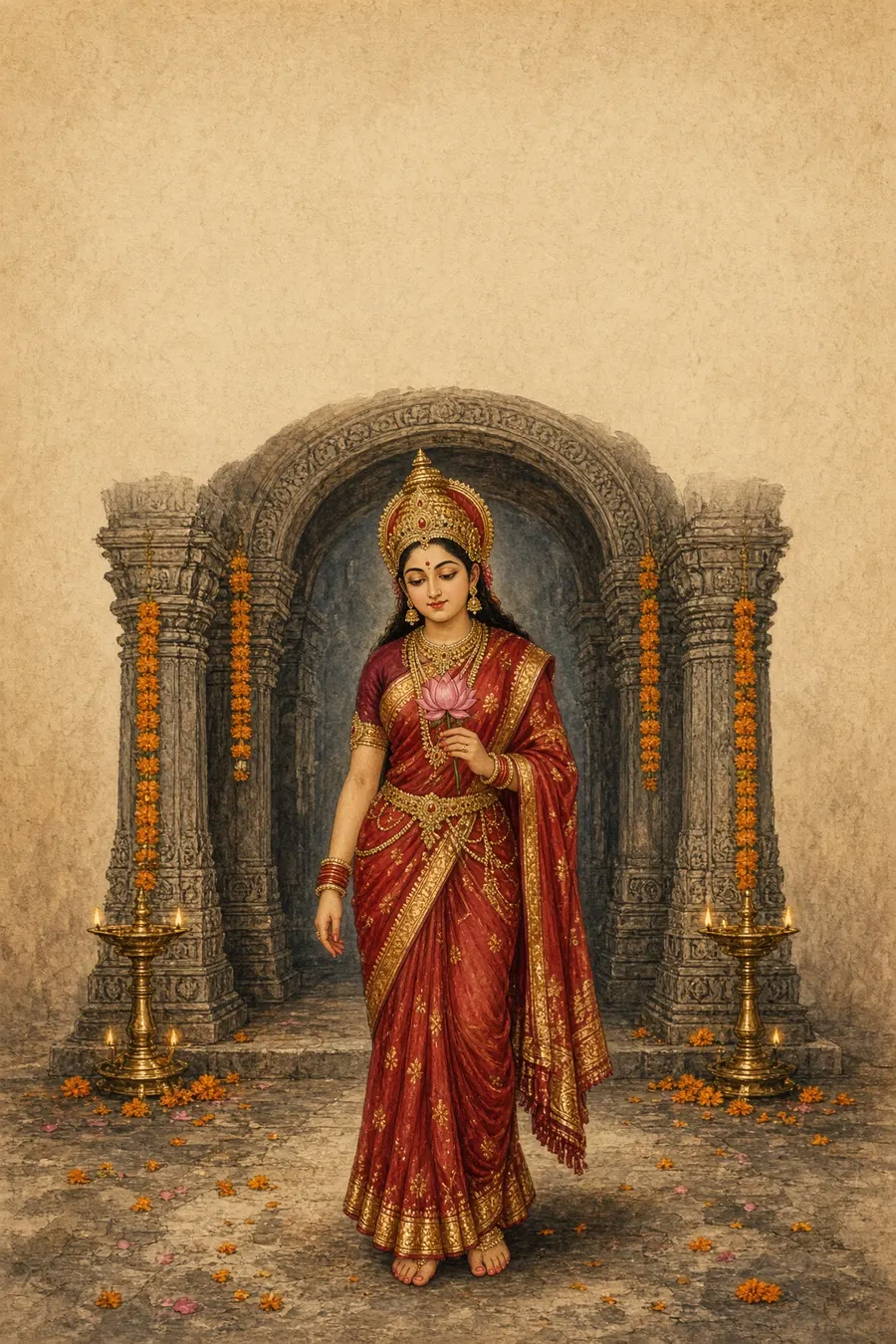
Maa Kamakhya is the Mother worshipped at Nilachala as the power of life itself, clothed in this shrine's painting with her feet upon the hill.
Katha
The peetha at Guwahati is one of the oldest living seats of the Devi. The sanctum is not an image in the ordinary sense, and this app will not turn it into a spectacle. What a house may keep is her name, a red flower, and a quiet mind. Ambubachi, when the temple rests, is a teaching that the Mother's rhythm is her own.
Swaroop and meaning
Life's power is worshipped by restraint as much as by approach.
- Vahana
- She is worshipped in the hill. The painting gives her a standing, clothed, full form.
- Weapons and signs
- None displayed. The sanctum is not a scene to be drawn crudely.
- Consort and family
- The Mother. Bhagwan Shri Shiva is the lord of the same hill's wider theology. Among the Shakti Peethas, where the tradition says the body of the Mother fell.
- Colour
- Red
- Flower
- Red hibiscus
- Vrat
- Ambubachi is the temple's own closure and opening. A home version should not be made that would shock a child.
- Bhog
- Red flowers · A cloth · A restraint of speech
- Temples and tirthas
- Nilachal, Guwahati, Assam.
- Festivals
- Ambubachi and Navaratri.
Mool mantra
ॐ कामाख्यै नमः
Om Kamakhyai Namah
Om. Salutation to Kamakhya.
Shri Yantra
The Shri Yantra is the fit geometry. The mantra Om Kamakhyai Namah is in the hall in full. This app will not draw the sanctum's secret as a picture for strangers. Reverence includes knowing what not to display.
A plate is shown only when this deity's own geometry is in the yantra hall. Another deity's yantra is not borrowed.
See the yantra hallPuja vidhi
A household vidhi for Maa Kamakhya. It is complete without a priest. If your family has a stricter order, follow that. This is the common gentle form.
Samagri: A clean cloth for the seat, A lamp and oil or ghee, Incense, Water in a small vessel, Flowers, Red flowers, A cloth, A restraint of speech.
Prepare the place
Sweep a small corner. Lay the cloth. Set a picture or a simple mark of Maa Kamakhya. Bathe, or at least wash face, hands, and feet. Sit facing east or north if the room allows.
Sankalpa
Say your name quietly, the weekday, and the intention: "I offer this puja to Maa Kamakhya for the welfare of this house." A sankalpa is a sentence, not a speech.
Light the lamp
Light the lamp and incense. Offer the flame first. If the air is close, keep the incense short. The lamp can stay.
Invocation
Join the palms. Say माँ कामाख्या and the mantra from the mantra hall (om kamakhyai). Invite Maa Kamakhya as a guest, not as a force to be used.
Offerings
Offer water, then flowers, then the foods of this deity: Red flowers, A cloth, A restraint of speech. What you will eat later, offer first. Do not offer anything you would not serve a person you respect.
Japa
Repeat the mantra 11, 28, or 108 times. Use the japa room of this app if you wish. One round done with attention is better than five done to finish.
Aarti and closing
Circle the lamp clockwise, three or seven times, if an aarti is in the mantra hall. Bow. Ask forgiveness for what was hurried. Share the offered food. Leave the seat as clean as you found it.