
BhaktiSanctum
The Lord who wears the serpent
Shri Nageshwar
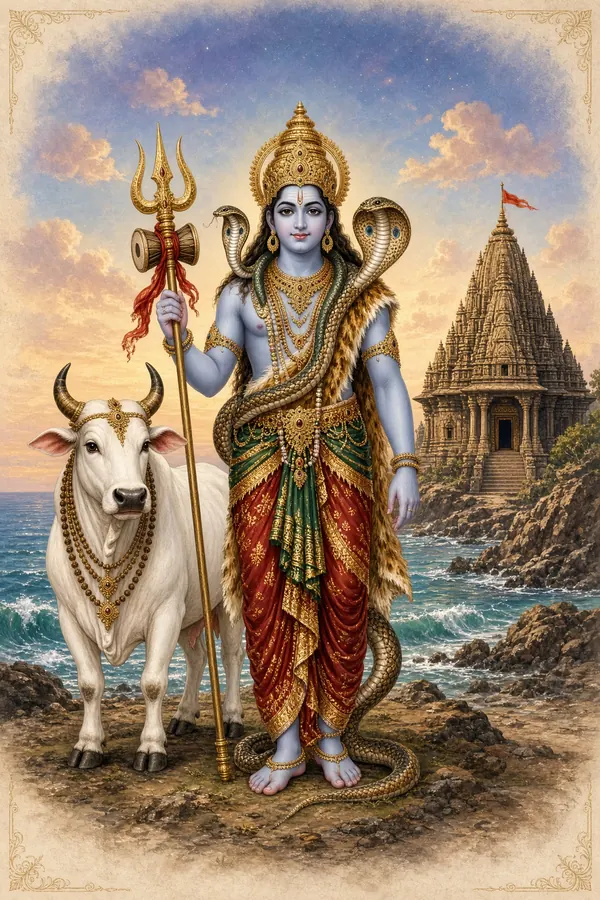
Shri Nageshwar is Bhagwan Shri Shiva as the one before whom fear of the serpent, and fear itself, is set down.
Katha
A puranic telling at this seat remembers a devotee imprisoned by a man who hated the name of Shiva, and the Lord breaking that prison. The serpent on his body is the same teaching as the poison in the throat: what frightens the world can rest on him without becoming the master. Two towns claim the Jyotirlinga. Devotees may honour both without a quarrel. No snake is to be caught for the worship.
Swaroop and meaning
Courage here is calm. It does not tease what can bite.
- Vahana
- Nandi.
- Weapons and signs
- The linga. The serpent is an ornament, not a weapon aimed at a neighbour.
- Consort and family
- Maa Parvati. A Jyotirlinga of Bhagwan Shri Shiva. The widely visited seat is near Dwarka in Gujarat. Another claim is kept at Aundha in Maharashtra.
- Colour
- Blue-grey
- Flower
- Bilva
- Vrat
- Monday. Nag Panchami belongs to the serpent-worship of the household, kept without cruelty.
- Bhog
- Bilva · Milk · Flowers, never a living snake offered or harmed
- Temples and tirthas
- Nageshwar near Dwarka, and the older claim at Aundha Nagnath.
- Festivals
- Maha Shivaratri, Nag Panchami.
Mool mantra
ॐ नमः शिवाय
Om Namah Shivaya
Om. Salutation to Shiva, the auspicious.
Yantra of Bhagwan Shri Shiva
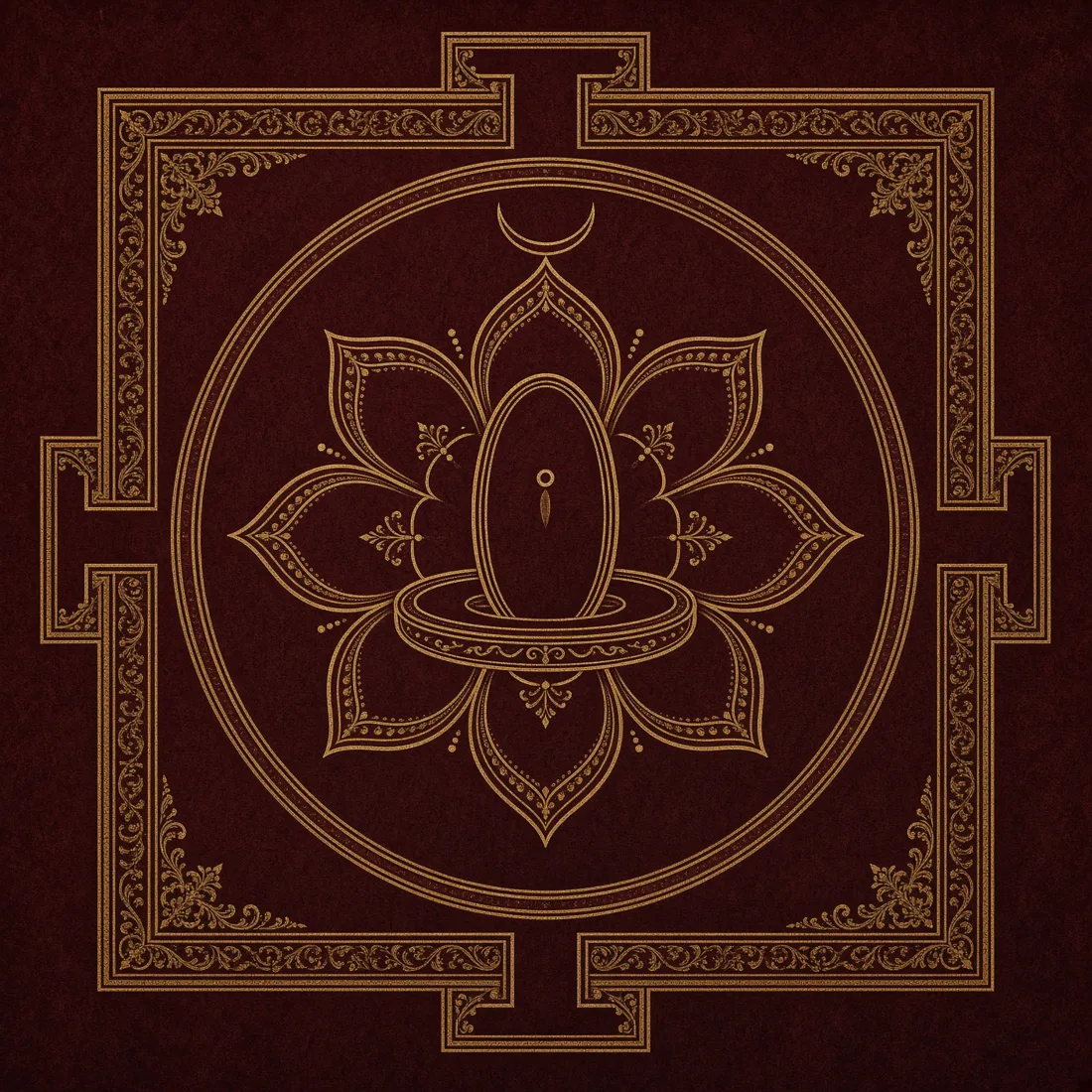
Bhupura with four gates, eight lotus petals, the linga seated on the yoni, the crescent, and the bindu. The twelve Jyotirlingas are twelve seats of this same Lord, so they keep this yantra and not twelve others.
ॐ नमः शिवाय ॥
Om Namah Shivaya.
Place it facing east or north. Monday and Shivaratri are the days the house already knows.
Water, bel, a white flower, bhasma if the house keeps it, and the five-syllable mantra.
The phala named with this yantra is the peace of the auspicious one, the same Lord who holds the poison and the river.
See the yantra hallPuja vidhi
A household vidhi for Shri Nageshwar. It is complete without a priest. If your family has a stricter order, follow that. This is the common gentle form.
Samagri: A clean cloth for the seat, A lamp and oil or ghee, Incense, Water in a small vessel, Flowers, Bilva, Milk, Flowers, never a living snake offered or harmed.
Prepare the place
Sweep a small corner. Lay the cloth. Set a picture or a simple mark of Shri Nageshwar. Bathe, or at least wash face, hands, and feet. Sit facing east or north if the room allows.
Sankalpa
Say your name quietly, the weekday, and the intention: "I offer this puja to Shri Nageshwar for the welfare of this house." A sankalpa is a sentence, not a speech.
Light the lamp
Light the lamp and incense. Offer the flame first. If the air is close, keep the incense short. The lamp can stay.
Invocation
Join the palms. Say श्री नागेश्वर and the mantra from the mantra hall (om namah shivaya). Invite Shri Nageshwar as a guest, not as a force to be used.
Offerings
Offer water, then flowers, then the foods of this deity: Bilva, Milk, Flowers, never a living snake offered or harmed. What you will eat later, offer first. Do not offer anything you would not serve a person you respect.
Japa
Repeat the mantra 11, 28, or 108 times. Use the japa room of this app if you wish. One round done with attention is better than five done to finish.
Aarti and closing
Circle the lamp clockwise, three or seven times, if an aarti is in the mantra hall. Bow. Ask forgiveness for what was hurried. Share the offered food. Leave the seat as clean as you found it.