
BhaktiSanctum
The axe-bearing brahmin
Shri Parashurama
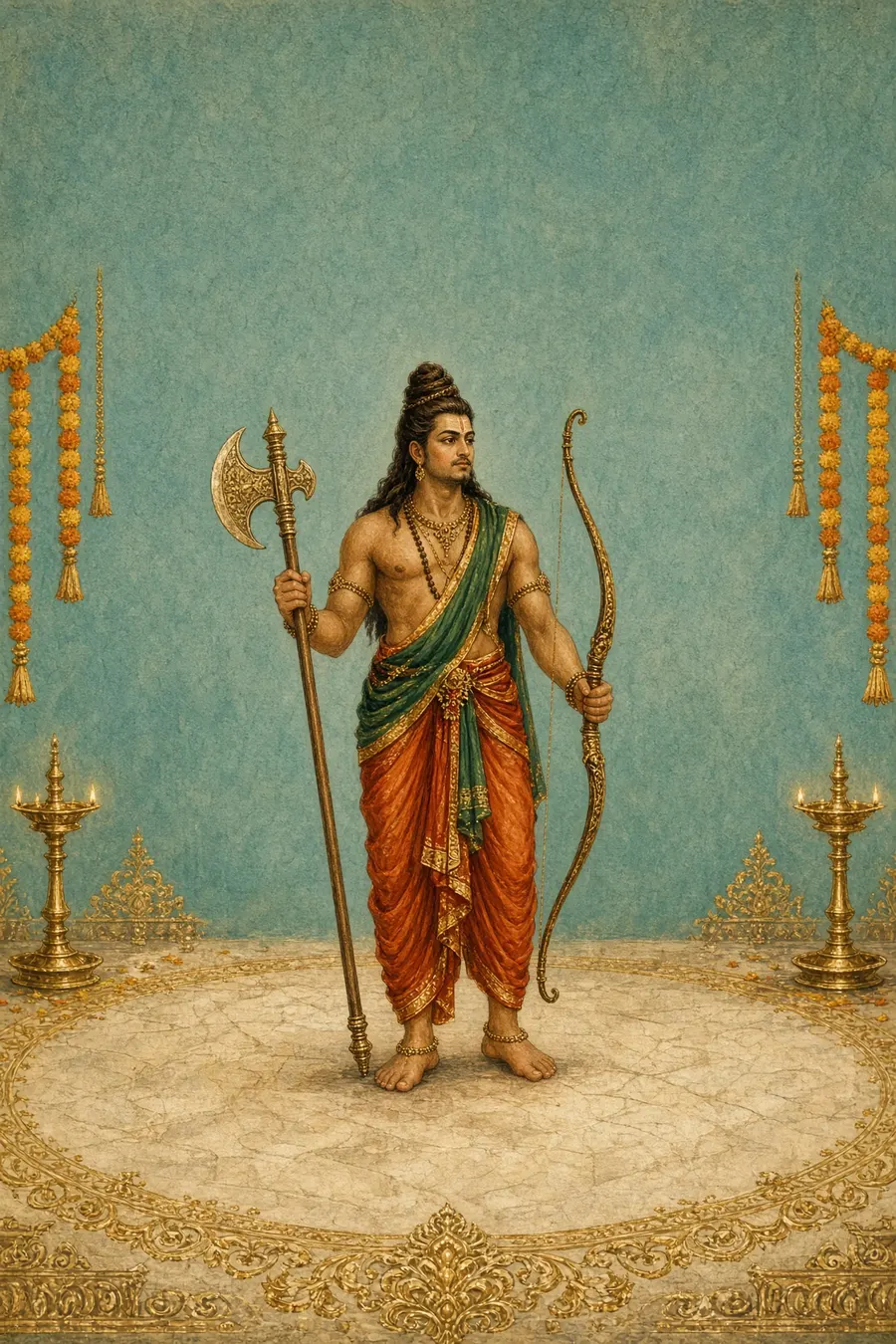
Shri Parashurama is the difficult avatar, a brahmin with an axe, remembered when dharma had been taken by force.
Katha
Jamadagni's house was wronged by a king's arrogance, and Renuka's story is bound to that house. Parashurama's campaigns against the warrior class are told as a correction that itself has to be laid down. He gives the axe-tradition to Shri Rama in the Ramayana's meeting, and the younger avatar is the one who remains. Worship him as a warning, not as a model for anger.
Swaroop and meaning
Even an avatar of force yields to the avatar of restraint. That yielding is the teaching.
- Vahana
- He walks the earth. No gentle beast is his sign.
- Weapons and signs
- The axe, given in the tradition by Bhagwan Shri Shiva.
- Consort and family
- This avatar is remembered for a war, not for a marriage. Sixth of the Dashavatara. Son of Jamadagni and Renuka in the story.
- Colour
- Red and ascetic ochre
- Flower
- Red flowers
- Vrat
- The jayanti follows a tithi. At home, do not turn this day into a praise of violence.
- Bhog
- A lamp · Water · A vow against cruelty
- Temples and tirthas
- Many western-coast shrines and the Parashurama country of coastal memory.
- Festivals
- Parashurama Jayanti, by tithi.
Mool mantra
ॐ नमो नारायणाय
Om Namo Narayanaya
Om. Salutation to Narayana, the one in whom all rest.
Yantra of Shri Vishnu
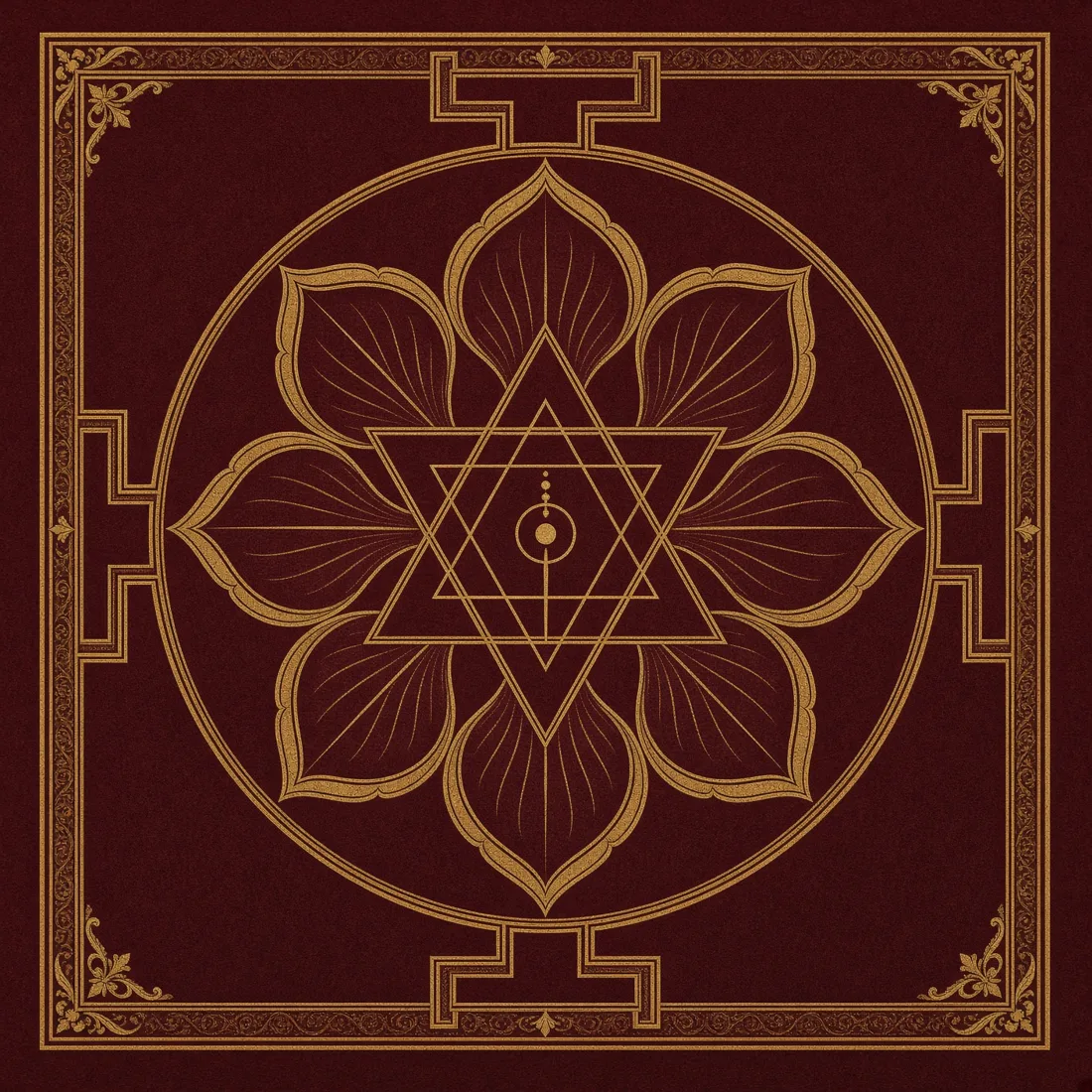
Bhupura with four gates, eight lotus petals, the shatkona, and the vertical mark with the bindu. The avataras keep this yantra because they are this same Bhagwan.
ॐ नमो नारायणाय ॥
Om Namo Narayanaya.
Place it where the tulsi and the lamp already stand. Thursday is the day many houses choose.
Tulsi, a yellow flower, water, and the eight-syllable mantra or Om Namo Narayanaya.
The tradition calls this the seat of the Preserver. The fruit is remembrance of him.
See the yantra hallPuja vidhi
A household vidhi for Shri Parashurama. It is complete without a priest. If your family has a stricter order, follow that. This is the common gentle form.
Samagri: A clean cloth for the seat, A lamp and oil or ghee, Incense, Water in a small vessel, Flowers, A lamp, Water, A vow against cruelty.
Prepare the place
Sweep a small corner. Lay the cloth. Set a picture or a simple mark of Shri Parashurama. Bathe, or at least wash face, hands, and feet. Sit facing east or north if the room allows.
Sankalpa
Say your name quietly, the weekday, and the intention: "I offer this puja to Shri Parashurama for the welfare of this house." A sankalpa is a sentence, not a speech.
Light the lamp
Light the lamp and incense. Offer the flame first. If the air is close, keep the incense short. The lamp can stay.
Invocation
Join the palms. Say श्री परशुराम and the mantra from the mantra hall (om namo narayanaya). Invite Shri Parashurama as a guest, not as a force to be used.
Offerings
Offer water, then flowers, then the foods of this deity: A lamp, Water, A vow against cruelty. What you will eat later, offer first. Do not offer anything you would not serve a person you respect.
Japa
Repeat the mantra 11, 28, or 108 times. Use the japa room of this app if you wish. One round done with attention is better than five done to finish.
Aarti and closing
Circle the lamp clockwise, three or seven times, if an aarti is in the mantra hall. Bow. Ask forgiveness for what was hurried. Share the offered food. Leave the seat as clean as you found it.
Copied stotras and names
- श्री परशुराम आरतीश्री परशुराम आरतीAartis · 16 verses
- परशुराम चालीसाश्री गुरु चरण सरोज छवि, निज मन मन्दिर धारिChalisas · 48 verses
- परशुरामकृत दुर्गा स्तोत्रम्परशुराम उवाचStotras · 62 verses
- परशुराम कृत महाकाली स्तोत्रम्परशुराम कृत महाकाली स्तोत्रम्Stotras · 22 verses
- परशुराम स्तवन्जय परशुराम ललाम करूणाधाम दुःखहर सुखकरम्Stotras · 18 verses
- परशुरामकृता गजाननस्तुतिःसहस्रादित्यसङ्काश! नमस्ते जगदीश्वर!Stotras · 25 verses
- श्री परशुराम चालीसाश्रीशिव गुरु स्वामी माहेश्वर मज तु उद्धारीChalisas · 43 verses
- श्री परशुरामांची आरती (जमदग्नीकुळभूषण)जय राम श्रीराम जय भार्गवरामाAartis · 6 verses
- श्री परशुराम अष्टकम्श्री परशुराम अष्टकम्Ashtakams · 50 verses