
BhaktiSanctum
The eclipse's head
Shri Rahu
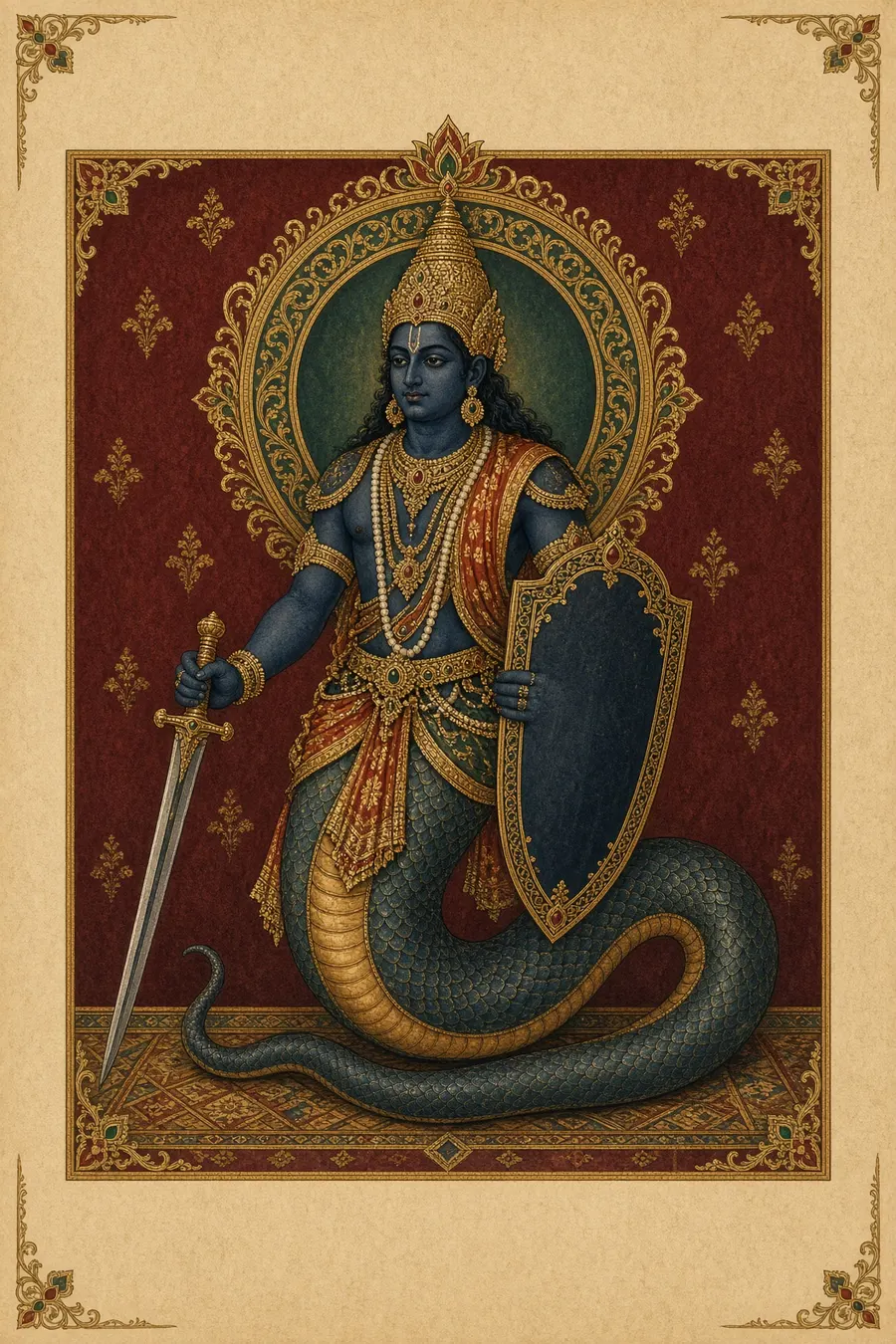
Shri Rahu is the head of the eclipse in the row of nine, a shadow that asks for steadiness and not for superstition sold as fate.
Katha
When the nectar rose, a being sat in the line who was not entitled, drank, and was divided. The head remained immortal as Rahu, the body as Ketu. It is a myth about a stolen place among the gods, and it has been abused as a way to frighten people into buying remedies. This shrine keeps the story and refuses the trade. During an eclipse, a quiet house, a mantra, and kindness to animals and to dependants are the old mood. Work that must be done may be done.
Swaroop and meaning
A shadow across the sun is not the end of the sun. Remember that, and help someone who is actually afraid.
- Vahana
- A lion or a chariot in the calendar art.
- Weapons and signs
- None that a house should imitate.
- Consort and family
- None that this worship requires. A shadow graha. In the churning myth he is the head that drank a drop of nectar and was cut, yet did not die.
- Colour
- Smoky blue
- Flower
- Any simple flower. Do not make a spectacle.
- Vrat
- A short Saturday lamp. No fast that harms health.
- Bhog
- Black sesame · A blue or black cloth on the seat · Food given away
- Temples and tirthas
- Navagraha shrines.
- Festivals
- Eclipses are his famous hour. The traditional bath and the quiet mantra are enough. Pregnant women need not be frightened with extra rules from this page.
Mool mantra
ॐ भ्रां भ्रीं भ्रौं सः राहवे नमः
Om Bhraam Bhreem Bhraum Sah Rahave Namah
Salutation to Rahu.
Graha practice
The graha diagrams of the printed tradition place the beeja in a bindu inside a lotus and a square. The beeja below is the practice. A graha mantra is not a substitute for medicine, work, or a clear conscience.
A plate is shown only when this deity's own geometry is in the yantra hall. Another deity's yantra is not borrowed.
See the yantra hallPuja vidhi
A household vidhi for Shri Rahu. It is complete without a priest. If your family has a stricter order, follow that. This is the common gentle form.
Samagri: A clean cloth for the seat, A lamp and oil or ghee, Incense, Water in a small vessel, Flowers, Black sesame, A blue or black cloth on the seat, Food given away.
Prepare the place
Sweep a small corner. Lay the cloth. Set a picture or a simple mark of Shri Rahu. Bathe, or at least wash face, hands, and feet. Sit facing east or north if the room allows.
Sankalpa
Say your name quietly, the weekday, and the intention: "I offer this puja to Shri Rahu for the welfare of this house." A sankalpa is a sentence, not a speech.
Light the lamp
Light the lamp and incense. Offer the flame first. If the air is close, keep the incense short. The lamp can stay.
Invocation
Join the palms. Say श्री राहु and the mantra from the mantra hall (rahu beeja). Invite Shri Rahu as a guest, not as a force to be used.
Offerings
Offer water, then flowers, then the foods of this deity: Black sesame, A blue or black cloth on the seat, Food given away. What you will eat later, offer first. Do not offer anything you would not serve a person you respect.
Japa
Repeat the mantra 11, 28, or 108 times. Use the japa room of this app if you wish. One round done with attention is better than five done to finish.
Aarti and closing
Circle the lamp clockwise, three or seven times, if an aarti is in the mantra hall. Bow. Ask forgiveness for what was hurried. Share the offered food. Leave the seat as clean as you found it.