
BhaktiSanctum
The mother of contentment
Maa Santoshi
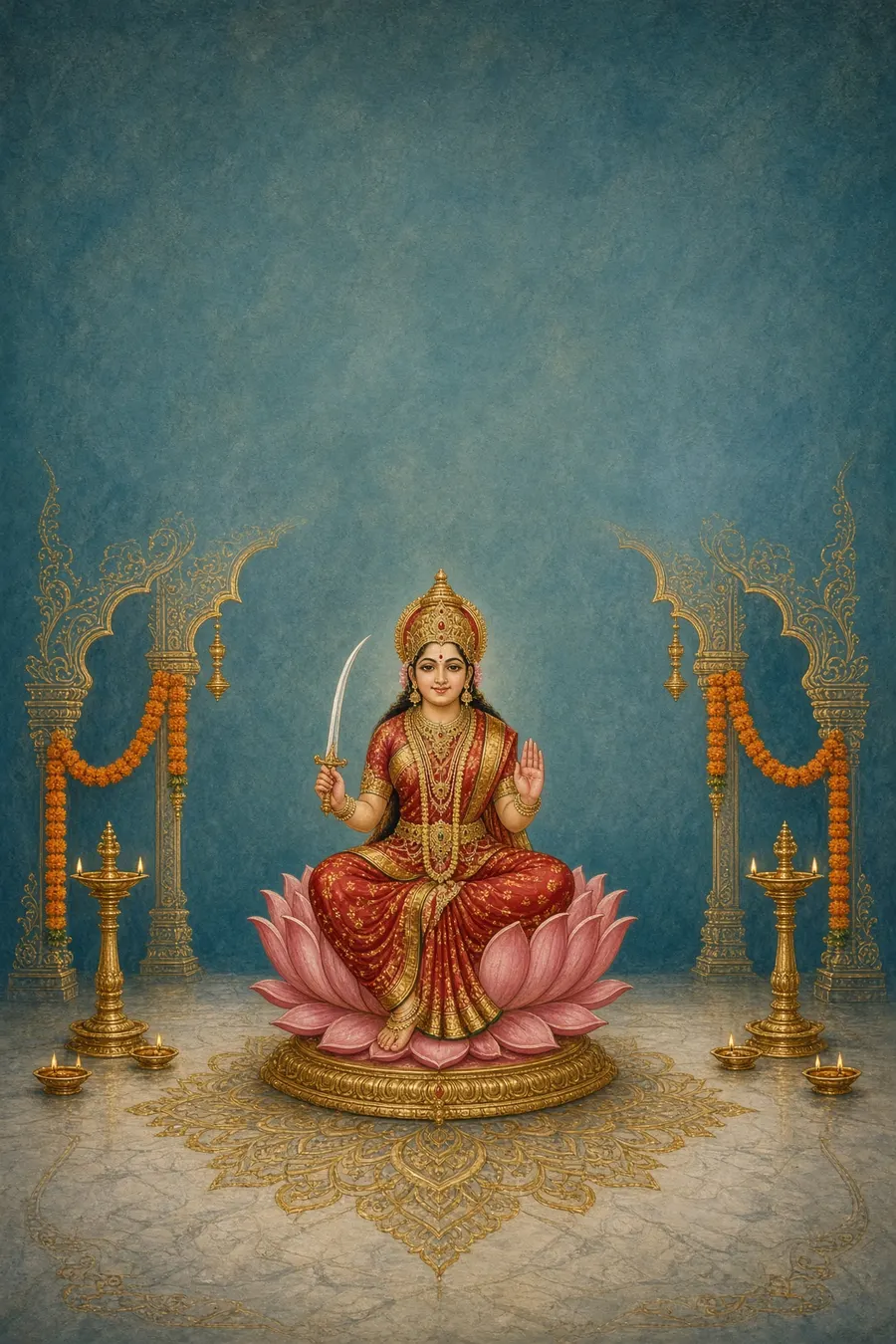
Maa Santoshi is contentment worshipped as a mother, so that wanting has a place to sit down.
Katha
Her vrata spread through homes that needed a Friday practice of enough-ness: gram and jaggery, a story, a refusal of sour speech as much as sour food. This shrine will not pretend she is a Vedic hymn. She is a mother's vow of satisfaction. That is already sacred if it makes a house kinder.
Swaroop and meaning
Contentment is not passivity. It is the end of the cruelty that comes from never having enough.
- Vahana
- Seated. A lotus or a lion is sometimes drawn. Contentment needs no beast of war.
- Weapons and signs
- None. A sword would contradict her name.
- Consort and family
- Worshipped as a mother. Stories call her the daughter of Shri Ganesha. Treat that as the vrata's story, told humbly. A vrata goddess loved in many modern homes, received as a form of the Mother.
- Colour
- Red and gold
- Flower
- Red or yellow
- Vrat
- Sixteen Fridays, only if health allows. Pregnant women, the ill, and children do not owe this fast.
- Bhog
- Gur-chana · A lamp · No sour food, if that is the vow you actually took
- Temples and tirthas
- Homes, and many local temples raised in her name in the last century.
- Festivals
- The sixteen-Friday vrata, and Fridays of Shravan.
Mool mantra
ॐ श्रीं सन्तोष्यै नमः
Om Shreem Santoshyai Namah
Om. Salutation to Santoshi.
A clean square
No historic yantra is drawn here. The vrata is the practice: gur and chana offered, the story read, the fast not imposed on the weak. The mantra Om Shreem Santoshyai Namah is in the hall in full.
A plate is shown only when this deity's own geometry is in the yantra hall. Another deity's yantra is not borrowed.
See the yantra hallPuja vidhi
A household vidhi for Maa Santoshi. It is complete without a priest. If your family has a stricter order, follow that. This is the common gentle form.
Samagri: A clean cloth for the seat, A lamp and oil or ghee, Incense, Water in a small vessel, Flowers, Gur-chana, A lamp, No sour food, if that is the vow you actually took.
Prepare the place
Sweep a small corner. Lay the cloth. Set a picture or a simple mark of Maa Santoshi. Bathe, or at least wash face, hands, and feet. Sit facing east or north if the room allows.
Sankalpa
Say your name quietly, the weekday, and the intention: "I offer this puja to Maa Santoshi for the welfare of this house." A sankalpa is a sentence, not a speech.
Light the lamp
Light the lamp and incense. Offer the flame first. If the air is close, keep the incense short. The lamp can stay.
Invocation
Join the palms. Say माँ संतोषी and the mantra from the mantra hall (om santoshyai). Invite Maa Santoshi as a guest, not as a force to be used.
Offerings
Offer water, then flowers, then the foods of this deity: Gur-chana, A lamp, No sour food, if that is the vow you actually took. What you will eat later, offer first. Do not offer anything you would not serve a person you respect.
Japa
Repeat the mantra 11, 28, or 108 times. Use the japa room of this app if you wish. One round done with attention is better than five done to finish.
Aarti and closing
Circle the lamp clockwise, three or seven times, if an aarti is in the mantra hall. Bow. Ask forgiveness for what was hurried. Share the offered food. Leave the seat as clean as you found it.