
BhaktiSanctum
The second Mahavidya, who ferries
Maa Tara
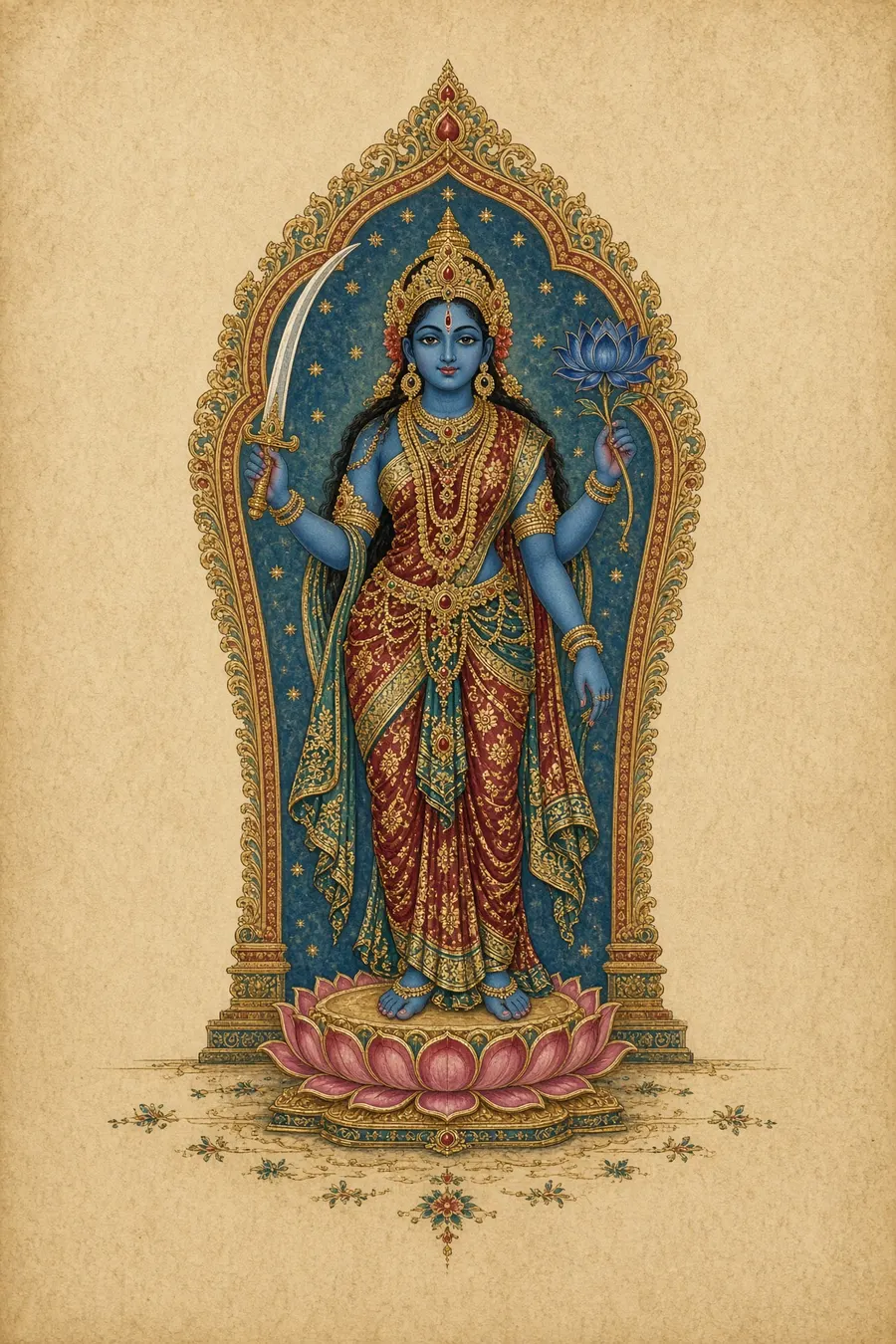
Maa Tara is the Mahavidya whose name means the one who carries across.
Katha
In the Shakta scheme the ten Mahavidyas are ten wisdoms of the one Mother. Tara is rescue. Her fierce dhyanas speak of a blue body and a burning ground because the far shore is reached by those who have stopped pretending they will not die. The public mantra is a salutation. Longer beeja-mantras of this goddess belong to a living teacher, and a screen is not an initiation.
Swaroop and meaning
To ask Tara for help is to agree to be ferried, which means to leave the bank one is clinging to.
- Vahana
- Often a corpse or a lotus in the dhyana texts. This shrine's painting keeps a dignified full figure and does not stage a shock.
- Weapons and signs
- Sword and scissors appear in some dhyanas. The teaching is the cutting of confusion.
- Consort and family
- A Mahavidya of the Mother, paired in the tantric scheme with a form of Shiva. The pairing is theology, not a household gossip. Second of the ten Mahavidyas. Neela Saraswati is a name used for her in some Shakta lines. She is not a copy of any Buddhist image.
- Colour
- Deep blue
- Flower
- Blue lotus if it can be had, otherwise any clean flower
- Vrat
- No fast is owed. A person unwell does not add one.
- Bhog
- Blue or red flowers · A lamp · A simple offering of rice
- Temples and tirthas
- Tarapith in Bengal is the seat most widely named. The cremation ground there is a place of worship, not of tourism.
- Festivals
- The temple's own days.
Mool mantra
ॐ तारायै नमः
Om Tarayai Namah
Om. Salutation to Tara.
Devi yantra
Tara's printed yantras vary by lineage and are often given with a guru. This shrine draws the Devi yantra and does not pretend to a secret diagram. The mantra Om Tarayai Namah is the open practice.
A plate is shown only when this deity's own geometry is in the yantra hall. Another deity's yantra is not borrowed.
See the yantra hallPuja vidhi
A household vidhi for Maa Tara. It is complete without a priest. If your family has a stricter order, follow that. This is the common gentle form.
Samagri: A clean cloth for the seat, A lamp and oil or ghee, Incense, Water in a small vessel, Flowers, Blue or red flowers, A lamp, A simple offering of rice.
Prepare the place
Sweep a small corner. Lay the cloth. Set a picture or a simple mark of Maa Tara. Bathe, or at least wash face, hands, and feet. Sit facing east or north if the room allows.
Sankalpa
Say your name quietly, the weekday, and the intention: "I offer this puja to Maa Tara for the welfare of this house." A sankalpa is a sentence, not a speech.
Light the lamp
Light the lamp and incense. Offer the flame first. If the air is close, keep the incense short. The lamp can stay.
Invocation
Join the palms. Say माँ तारा and the mantra from the mantra hall (om tarayai). Invite Maa Tara as a guest, not as a force to be used.
Offerings
Offer water, then flowers, then the foods of this deity: Blue or red flowers, A lamp, A simple offering of rice. What you will eat later, offer first. Do not offer anything you would not serve a person you respect.
Japa
Repeat the mantra 11, 28, or 108 times. Use the japa room of this app if you wish. One round done with attention is better than five done to finish.
Aarti and closing
Circle the lamp clockwise, three or seven times, if an aarti is in the mantra hall. Bow. Ask forgiveness for what was hurried. Share the offered food. Leave the seat as clean as you found it.
Copied stotras and names
- अहल्या द्रौपदी सीता ताराअहल्या द्रौपदी सीता तारा मंडोदरी तथाStotras · 2 verses
- अनन्त पद्मनाभ स्वामि अष्टोत्तर शत नामावलिॐ कृष्णाय नमःNames · 113 verses
- अर्धनारीश्वराष्टोत्तरशतनाम स्तोत्रम्(श्रीस्कन्दपुराणान्तर्गतम्)Names · 83 verses
- दशावतार स्तोत्रम् (वेदान्ताचार्य कृतम्)देवो नश्शुभमातनोतु दशधा निर्वर्तयन्भूमिकांStotras · 53 verses
- दशावतार स्तुतिनामस्मरणादन्योपायं न हि पश्यामो भवतरणेStotras · 25 verses
- देवी वैभवाश्चर्य अष्टोत्तर शत नाम स्तोत्रम्देवी वैभवाश्चर्य अष्टोत्तर शत नाम स्तोत्रम्Names · 85 verses
- देवी वैभवाश्चर्य अष्टोत्तर शत नामावलिॐ परमानन्दलहर्यै नमःNames · 109 verses
- गोदा देवी अष्टोत्तर शत स्तोत्रम्शतमखमणि नीला चारुकल्हारहस्ताNames · 62 verses
- गोदा देवी अष्टोत्तर शत नामावलिॐ श्रीरङ्गनायक्यै नमःNames · 112 verses
- हनुमदष्टोत्तरशतनामस्तोत्रम्(ब्रह्मवैवर्ते घटिकाचलमाहात्म्यतः)Names · 47 verses
- हनुमदष्टोत्तरशतनामावलिः (पारिजातप्रियाय)हनुमदष्टोत्तरशतनामावलिः (पारिजातप्रियाय)Names · 109 verses
- नन्दिकेश्वर अष्टोत्तर शत नामावलिःॐ नन्दिकेशाय नमःNames · 108 verses
- नटराज अष्टकमकुञ्चरचर्मकृताम्बरमम्बुरुहासनमाधवगेयगुणंAshtakams · 37 verses
- नटराज स्तोत्रं (पतञ्जलि कृतम्)पतञ्जलि दृगञ्जन-मनञ्जन-मचञ्चलपदं जनन भञ्जन करम्Stotras · 40 verses
- पार्वती अष्टोत्तर शत नामावलिःॐ पार्वत्यै नमःNames · 108 verses
- राघवेन्द्र अष्टोत्तर शत नामावलिॐ स्ववाग्दे व तासरि द्ब क्तविमली कर्त्रे नमःNames · 107 verses
- शनि अष्टोत्तर शत नाम स्तोत्रम्शनैश्चराय शान्ताय सर्वाभीष्टप्रदायिनेNames · 45 verses
- शनि अष्टोत्तर शत नामावलिॐ शनैश्चराय नमःNames · 108 verses
- श्री स्वामी समर्थ तारक मंत्रनिःशंक हो निर्भय हो मना रे,Stotras · 20 verses
- श्रीभद्राम्बिकाष्टोत्तरशतनामावलिःश्रीभद्राम्बिकाष्टोत्तरशतनामावलिःNames · 109 verses
- श्यामला अष्टोत्तर शत नामावलिॐ मातङ्ग्यै नमःNames · 109 verses
- श्री वासवी कन्यका परमेश्वरी अष्टोत्तर शत नामावलिॐ श्रीवासवाम्बायै नमःNames · 109 verses
- श्री अनघदेव अष्टोत्तरशतनाम स्तोत्रम्श्री अनघदेव अष्टोत्तरशतनाम स्तोत्रम्Names · 60 verses
- श्री अनघदेवाष्टोत्तरशतनामावलीश्री अनघदेवाष्टोत्तरशतनामावलीNames · 110 verses
- श्री अनघादेवि अष्टोत्तरशतनाम स्तोत्रम्श्री अनघादेवि अष्टोत्तरशतनाम स्तोत्रम्Names · 58 verses
- श्री अनघादेवि अष्टोत्तरशतनामावलीश्री अनघादेवि अष्टोत्तरशतनामावलीNames · 110 verses
- श्री अनन्त पद्मनाभ अष्टोत्तर शत नामावलिॐ अनन्ताय नमःNames · 108 verses
- श्री अर्धनारीश्वराष्टोत्तरशतनामावलीश्री अर्धनारीश्वराष्टोत्तरशतनामावलीNames · 218 verses
- श्री अरुणाचलेश्वर अष्टोत्तरशतनामावलीश्री अरुणाचलेश्वर अष्टोत्तरशतनामावलीNames · 110 verses
- श्रीआर्याष्टोत्तरशतनामावलीश्रीआर्याष्टोत्तरशतनामावलीNames · 117 verses
- श्री बाला अष्टोत्तरशतनाम स्तोत्रम्श्री बाला अष्टोत्तरशतनाम स्तोत्रम्Names · 63 verses
- श्री बालाष्टोत्तरशतनाम स्तोत्रम्श्री बालाष्टोत्तरशतनाम स्तोत्रम्Names · 53 verses
- श्री बालाष्टोत्तरशतनामावलीॐ श्रीबालायै नमःNames · 108 verses
- श्री बुद्धिदेवी अष्टोत्तरशतनाम स्तोत्रम्सूर्य उवाचNames · 52 verses
- श्री बुद्धिदेवी अष्टोत्तरशतनामावलीॐ मूलवह्निसमुद्भूतायै नमःNames · 109 verses
- श्री चामुण्डेश्वरी अष्टोत्तरशतनाम स्तोत्रम्श्री चामुण्डेश्वरी अष्टोत्तरशतनाम स्तोत्रम्Names · 47 verses
- श्रीचामुण्डेश्वर्यष्टोत्तरशतनामावलीश्रीचामुण्डेश्वर्यष्टोत्तरशतनामावलीNames · 110 verses
- श्रीचण्डी षष्ठ्युत्तरत्रिशत्यर्चनम्श्रीचण्डी षष्ठ्युत्तरत्रिशत्यर्चनम्Stotras · 394 verses
- श्री देवसेना अष्टोत्तरशतनामावलीॐ पीताम्बर्यै नमःNames · 109 verses
- श्रीदेव्यष्टोत्तरशतनामावली (महिषमर्दिनि वनदुर्गा)श्रीदेव्यष्टोत्तरशतनामावली (महिषमर्दिनि वनदुर्गा)Names · 115 verses
- श्री धन्वन्तर्यष्टोत्तरशतनाम स्तोत्रम्धन्वन्तरिः सुधापूर्णकलशाढ्यकरो हरिःNames · 63 verses
- श्री धन्वन्तर्यष्टोत्तरशतनामावलीओं धन्वन्तरये नमःNames · 109 verses
- श्री गरुडाष्टोत्तरशतनाम स्तोत्रम्श्री गरुडाष्टोत्तरशतनाम स्तोत्रम्Names · 57 verses
- श्री हरिहर अष्टोत्तर शतनामावलीश्री हरिहर अष्टोत्तर शतनामावलीNames · 111 verses
- इन्दिराष्टोत्तरशतनाम स्तोत्रम्इन्दिराष्टोत्तरशतनाम स्तोत्रम्Names · 53 verses
- श्री इन्दिराष्टोत्तरशतनामावलीश्री इन्दिराष्टोत्तरशतनामावलीNames · 111 verses
- श्री कामाक्षी अष्टोत्तर शत नामावलिॐ कालकण्ठ्यै नमःNames · 109 verses
- श्री कमला अष्टोत्तर शत नामावलिःॐ महामायायै नमःNames · 109 verses
- श्री कमला अष्टोत्तर शत नामा स्तोत्रंशतमष्टोत्तरं नाम्नां कमलाया वराननेNames · 41 verses
- श्री कार्तवीर्यार्जुन अष्टोत्तरशतनामावलीश्री कार्तवीर्यार्जुन अष्टोत्तरशतनामावलीNames · 111 verses
- श्रीकुमार्यष्टोत्तरशतनामावलीश्रीकुमार्यष्टोत्तरशतनामावलीNames · 119 verses
- श्रीललिता अष्टोत्तर शतनामावलीश्री ललिताष्टोत्तरशतनामावलीNames · 111 verses
- श्री ललिता अष्टोत्तरशतनाम स्तोत्रम् २शिवा भवानी कल्याणी गौरी काली शिवप्रियाNames · 37 verses
- श्री ललिताष्टोत्तरशतनामावली २श्री ललिताष्टोत्तरशतनामावली २Names · 111 verses
- श्री ललिता सहस्रनाम फलश्रुतिहयग्रीव उवाचNames · 177 verses
- श्री महाशास्तृ अष्टोत्तरशतनामावलीश्री महाशास्तृ अष्टोत्तरशतनामावलीNames · 111 verses
- श्री महावाराही अष्टोत्तरशतदिव्यनाम स्तोत्रश्री महावाराही अष्टोत्तरशतदिव्यनाम स्तोत्रNames · 102 verses
- श्री महावाराही पादुकार्चनाश्री महावाराही पादुकार्चनाNames · 112 verses
- श्री मृत्युञ्जय अष्टोत्तर शत नामावलिःॐ मृत्युञ्जयाय नमःNames · 110 verses
- श्री नागदेवता अष्टोत्तरशतनामावलीश्री नागदेवता अष्टोत्तरशतनामावलीNames · 123 verses
- श्री नटराज हृदयभावना सप्तकम्कामशासनमाश्रितार्तिनिवारणैकधुरन्धरंStotras · 29 verses
- श्री पद्मावती अष्टोत्तर शत नामावलिॐ पद्मावत्यै नमःNames · 120 verses
- श्री पीताम्बरा अष्टोत्तरशतनाम स्तोत्रम्श्री पीताम्बरा अष्टोत्तरशतनाम स्तोत्रम्Names · 109 verses
- श्री राज राजेश्वरी अष्टोत्तर शत नामावलिॐ भुवनेश्वर्यै नमःNames · 109 verses
- श्री रङ्गनाथ अष्टोत्तर शत नाम स्तोत्रम्श्री रङ्गनाथ अष्टोत्तर शत नाम स्तोत्रम्Names · 38 verses
- श्री रङ्गनाथ अष्टोत्तर शत नामावलिॐ श्रीरङ्गशायिने नमःNames · 108 verses
- श्री रेणुका अष्टोत्तरशतनाम स्तोत्रम्श्री रेणुका अष्टोत्तरशतनाम स्तोत्रम्Names · 38 verses
- श्री रेणुका अष्टोत्तरशतनामावलीॐ जगदम्बायै नमःNames · 109 verses
- सौभाग्याष्टोत्तरशतनामावलीसौभाग्याष्टोत्तरशतनामावलीNames · 111 verses
- श्री श्यामला अष्टोत्तरशतनाम स्तोत्रम्श्री श्यामला अष्टोत्तरशतनाम स्तोत्रम्Names · 46 verses
- श्री सिद्धिदेवी अष्टोत्तरशतनाम स्तोत्रम्श्री सिद्धिदेवी अष्टोत्तरशतनाम स्तोत्रम्Names · 58 verses
- श्री सिद्धिदेवी अष्टोत्तरशतनामावलीॐ स्वानन्दभवनान्तस्थहर्म्यस्थायै नमःNames · 109 verses
- श्री श्रीनिवास तारावली (श्रीदेवशर्म कृतम्)(श्रीदेवशर्म कृतम्)Stotras · 62 verses
- श्रीसूक्ताष्टोत्तरशतनामावलीओं हिरण्यवर्णायै नमःNames · 108 verses
- श्री सुवर्चला अष्टोत्तरशतनामावलीश्री सुवर्चला अष्टोत्तरशतनामावलीNames · 110 verses
- श्री तारा कवचम्श्री तारा कवचम्Kavach · 128 verses
- श्री तारा सहस्रनाम स्तोत्रम्श्री तारा सहस्रनाम स्तोत्रम्Names · 464 verses
- श्री तारा सहस्रनामावलीश्री तारा सहस्रनामावलीNames · 1012 verses
- श्रीताराशतनामावलिःश्रीताराशतनामावलिःNames · 102 verses
- श्रीतारातकारादिसहस्रनामस्तोत्रम्श्रीतारातकारादिसहस्रनामस्तोत्रम्Names · 498 verses
- श्री ताराम्बा अष्टोत्तर शत नामावलिःॐ तारिण्यै नमःNames · 108 verses
- श्री ताराम्बा अष्टोत्तर शत नामा स्तोत्रंतारिणी तरला तन्वी तारा तरुणवल्लरीNames · 44 verses
- श्री उमा अष्टोत्तरशतनाम स्तोत्रम्श्री उमा अष्टोत्तरशतनाम स्तोत्रम्Names · 34 verses
- श्री उमा अष्टोत्तरशतनामावलीॐ उमायै नमःNames · 109 verses
- श्री वल्ली अष्टोत्तरशतनामावली (108 Names)श्री वल्ली अष्टोत्तरशतनामावली (108 Names)Names · 111 verses
- श्री वराहाष्टोत्तरशतनाम स्तोत्रम्श्री वराहाष्टोत्तरशतनाम स्तोत्रम्Names · 45 verses
- श्री वराहाष्टोत्तरशतनामावलीश्री वराहाष्टोत्तरशतनामावलीNames · 110 verses
- श्री वाराही अष्टोत्तरशतनाम स्तोत्रम्श्री वाराही अष्टोत्तरशतनाम स्तोत्रम्Names · 45 verses
- श्री वेदव्यास अष्टोतरशतनामावलिःॐ वेदव्यासाय नमःNames · 108 verses
- श्री वीरभद्राष्टोत्तर शत नामावलिःॐ वीरभद्राय नमःNames · 110 verses
- श्री विघ्नेश्वर अष्टोत्तरशत नामावलिॐ विनायकाय नमःNames · 109 verses
- श्री विष्वक्सेनाष्टोत्तरशतनामावलीश्री विष्वक्सेनाष्टोत्तरशतनामावलीNames · 112 verses
- सुदर्शन अष्टोत्तर शत नाम स्तोत्रम्सुदर्शनश्चक्रराजः तेजोव्यूहो महाद्युतिःNames · 40 verses
- सुदर्शन अष्टोत्तर शत नामावलिॐ श्री सुदर्शनाय नमःNames · 115 verses
- शुक्र अष्टोत्तर शत नाम स्तोत्रम्शुक्रः शुचिः शुभगुणः शुभदः शुभलक्षणःNames · 38 verses
- शुक्र अष्टोत्तर शत नामावलिॐ शुक्राय नमःNames · 108 verses
- तारासहस्रनामस्तोत्रम्तारासहस्रनामस्तोत्रम्Names · 433 verses
- तारक मन्त्रमुतालम्: आदिStotras · 20 verses
- श्री उच्छिष्टगणनाथ अष्टोत्तरशतनामावलिःश्री उच्छिष्टगणनाथ अष्टोत्तरशतनामावलिःNames · 110 verses
- वाराही अष्टोत्तर शत नामावलिॐ वराहवदनायै नमःNames · 109 verses
- विघ्नेश्वर अष्टोत्तर शत नाम स्तोत्रम्विनायको विघ्नराजो गौरीपुत्रो गणेश्वरःNames · 35 verses
- Tara Sahasranama Stotramतारासहस्रनामस्तोत्रम्Names · 206 verses