
BhaktiSanctum
Three faces, and the Godavari's birth
Shri Trimbakeshwar
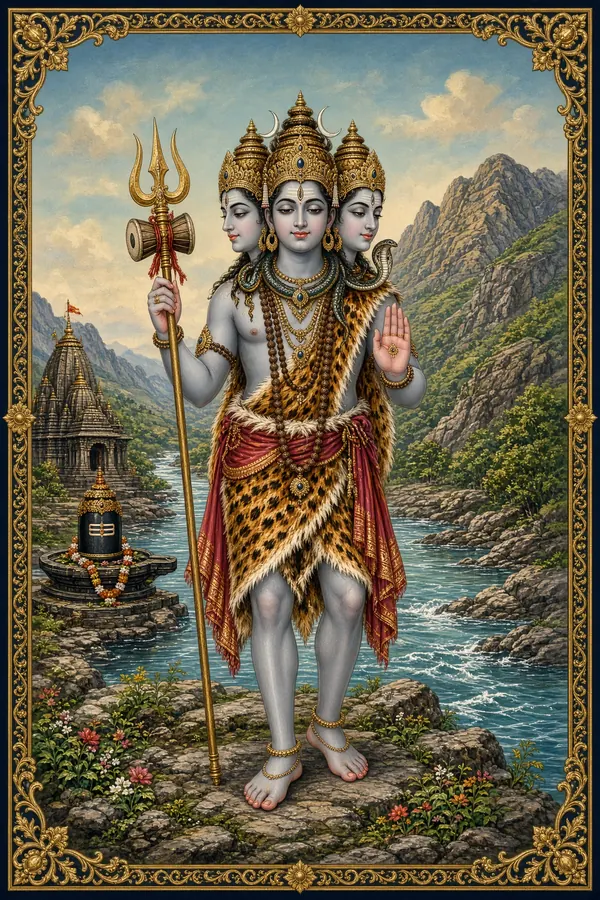
Shri Trimbakeshwar is Bhagwan Shri Shiva with three faces on one linga, at the country where the Godavari begins.
Katha
Tryambaka is already the name in the Mahamrityunjaya: the three-eyed one. At Trimbak the linga is carved with faces, a rare form among the twelve. The Godavari's traditional source is a short walk away. Pitru rites are famous here. They are a duty of gratitude, not a commerce in fear. If a family does not know the rite, a simple offering of water and a true memory of the dead is an honest beginning.
Swaroop and meaning
Three faces, one Lord. The river and the ancestors drink from the same reverence.
- Vahana
- Nandi.
- Weapons and signs
- The three-faced linga.
- Consort and family
- Maa Parvati is present in the worship of the kshetra. A Jyotirlinga of Bhagwan Shri Shiva. The Godavari is said to come forth nearby, at Kushavarta.
- Colour
- Ash-grey
- Flower
- Bilva
- Vrat
- Monday. Narayan Nagbali and other ancestral rites are performed here by priests. A household need not imitate a rite it has not been taught.
- Bhog
- Bilva · Water · Black sesame on special days of pitru
- Temples and tirthas
- Trimbak, near Nashik, Maharashtra.
- Festivals
- Maha Shivaratri, and Simhastha when the Kumbha is held in Nashik.
Mool mantra
ॐ नमः शिवाय
Om Namah Shivaya
Om. Salutation to Shiva, the auspicious.
Yantra of Bhagwan Shri Shiva
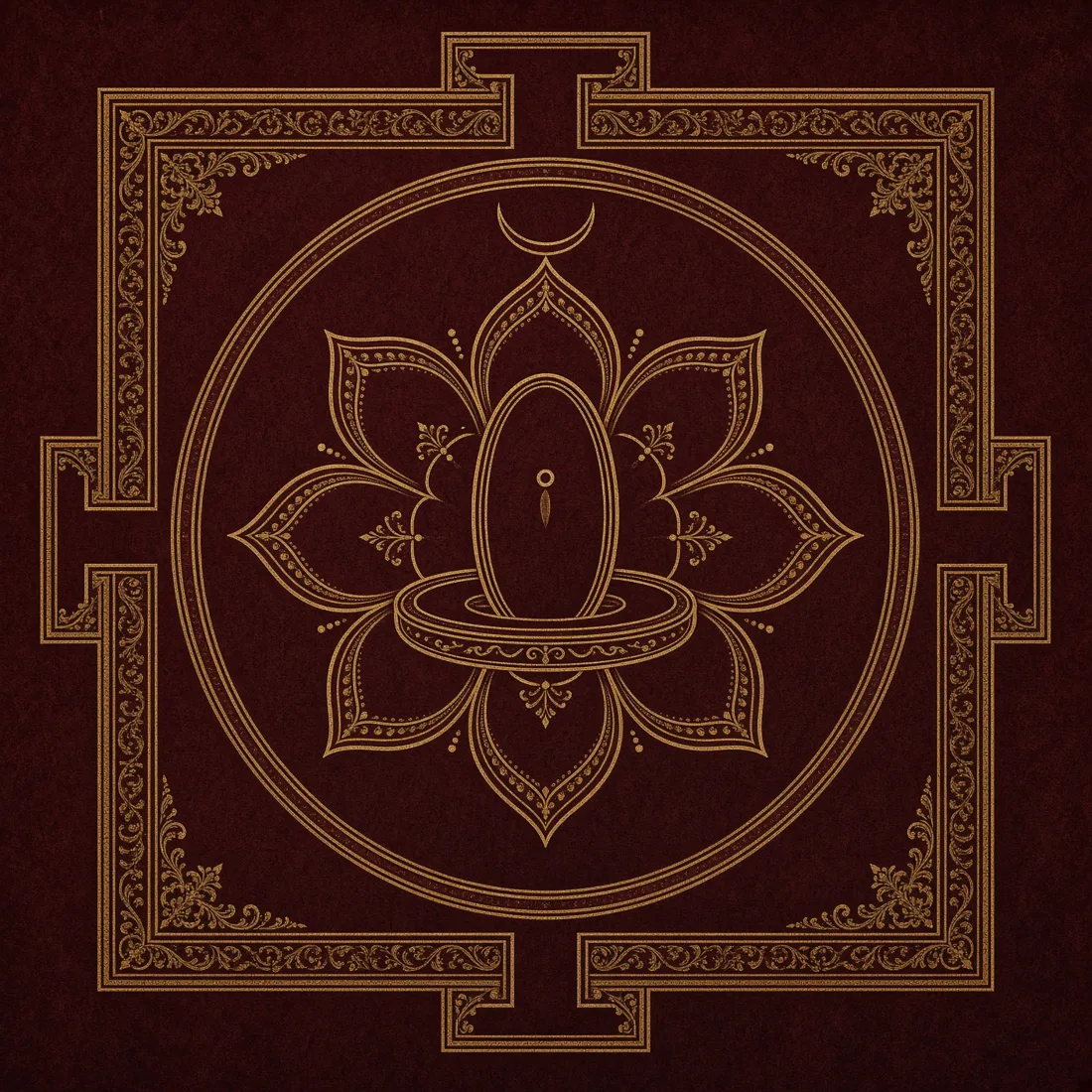
Bhupura with four gates, eight lotus petals, the linga seated on the yoni, the crescent, and the bindu. The twelve Jyotirlingas are twelve seats of this same Lord, so they keep this yantra and not twelve others.
ॐ नमः शिवाय ॥
Om Namah Shivaya.
Place it facing east or north. Monday and Shivaratri are the days the house already knows.
Water, bel, a white flower, bhasma if the house keeps it, and the five-syllable mantra.
The phala named with this yantra is the peace of the auspicious one, the same Lord who holds the poison and the river.
See the yantra hallPuja vidhi
A household vidhi for Shri Trimbakeshwar. It is complete without a priest. If your family has a stricter order, follow that. This is the common gentle form.
Samagri: A clean cloth for the seat, A lamp and oil or ghee, Incense, Water in a small vessel, Flowers, Bilva, Water, Black sesame on special days of pitru.
Prepare the place
Sweep a small corner. Lay the cloth. Set a picture or a simple mark of Shri Trimbakeshwar. Bathe, or at least wash face, hands, and feet. Sit facing east or north if the room allows.
Sankalpa
Say your name quietly, the weekday, and the intention: "I offer this puja to Shri Trimbakeshwar for the welfare of this house." A sankalpa is a sentence, not a speech.
Light the lamp
Light the lamp and incense. Offer the flame first. If the air is close, keep the incense short. The lamp can stay.
Invocation
Join the palms. Say श्री त्र्यम्बकेश्वर and the mantra from the mantra hall (om namah shivaya). Invite Shri Trimbakeshwar as a guest, not as a force to be used.
Offerings
Offer water, then flowers, then the foods of this deity: Bilva, Water, Black sesame on special days of pitru. What you will eat later, offer first. Do not offer anything you would not serve a person you respect.
Japa
Repeat the mantra 11, 28, or 108 times. Use the japa room of this app if you wish. One round done with attention is better than five done to finish.
Aarti and closing
Circle the lamp clockwise, three or seven times, if an aarti is in the mantra hall. Bow. Ask forgiveness for what was hurried. Share the offered food. Leave the seat as clean as you found it.