
BhaktiSanctum
The dwarf whose step was the world
Shri Vamana
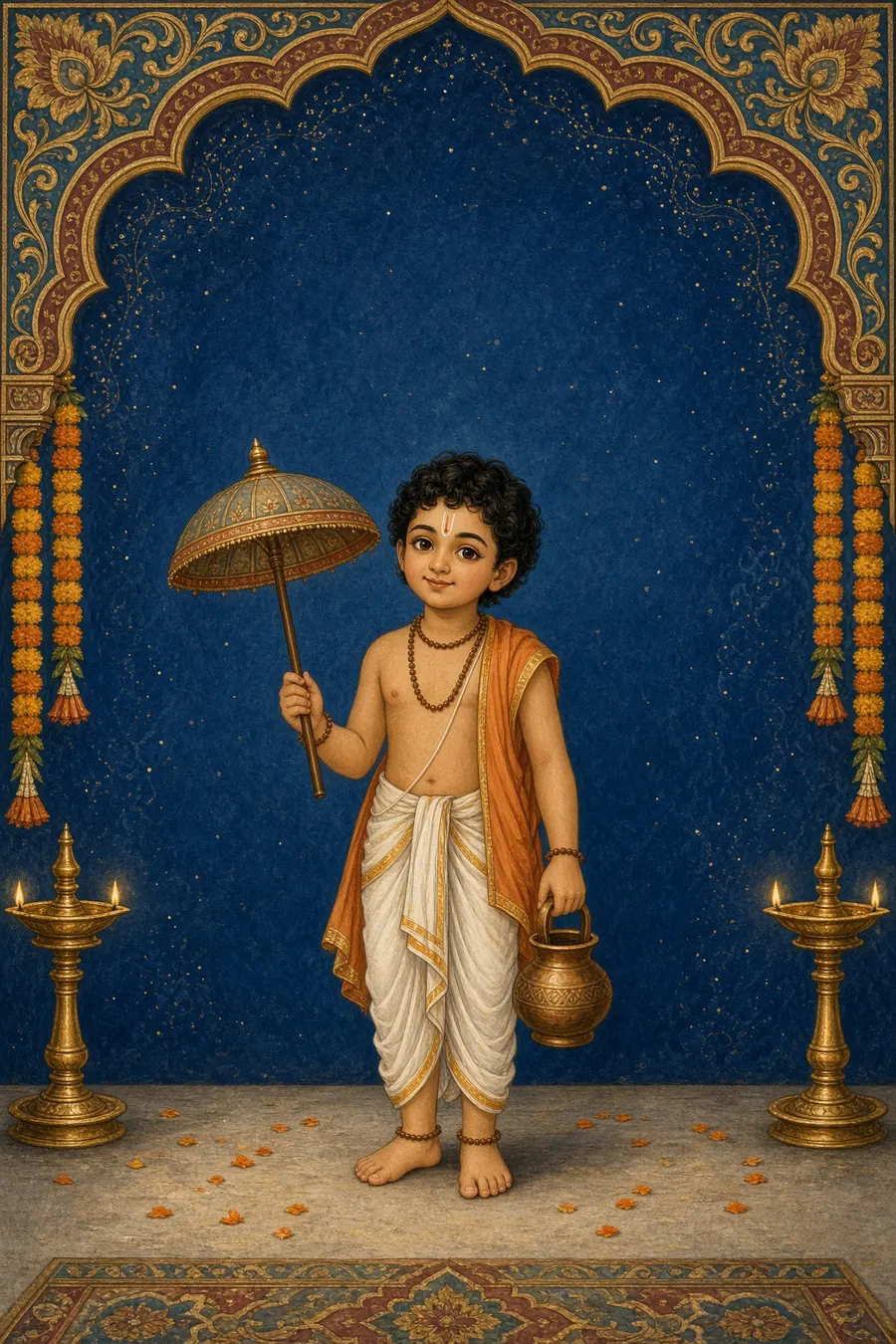
Shri Vamana is Shri Vishnu as a small student who asks a proud king for three steps of earth.
Katha
Bali was generous and proud. The dwarf asked for three paces. The king, against his teacher's fear, poured the water of the gift. The dwarf became vast. One step was earth, one was sky, and the third Bali offered his own head. The Lord did not humiliate the giver. He became the doorkeeper of Bali's realm and left him his honour. Onam still cooks a meal as if the king were visiting.
Swaroop and meaning
A small asking can unmask a large pride, and still leave the proud man his dignity if the asking was God's.
- Vahana
- He walks. The umbrella and the water-pot are the marks of the student.
- Weapons and signs
- No weapon. Three steps.
- Consort and family
- Shri Vishnu. The gift he asks is not a bride but three paces of land. Fifth of the Dashavatara.
- Colour
- Student yellow and earth
- Flower
- Tulsi
- Vrat
- Onam in Kerala remembers the king and the step. Keep it as generosity, not as triumph over a region.
- Bhog
- A little water · A grain of rice given · Tulsi
- Temples and tirthas
- Remembered at Thrikkakara and wherever Onam is kept, and in every Vishnu temple's avatar set.
- Festivals
- Onam, and the tithi of Vamana Jayanti.
Mool mantra
ॐ नमो नारायणाय
Om Namo Narayanaya
Om. Salutation to Narayana, the one in whom all rest.
Yantra of Shri Vishnu

Bhupura with four gates, eight lotus petals, the shatkona, and the vertical mark with the bindu. The avataras keep this yantra because they are this same Bhagwan.
ॐ नमो नारायणाय ॥
Om Namo Narayanaya.
Place it where the tulsi and the lamp already stand. Thursday is the day many houses choose.
Tulsi, a yellow flower, water, and the eight-syllable mantra or Om Namo Narayanaya.
The tradition calls this the seat of the Preserver. The fruit is remembrance of him.
See the yantra hallPuja vidhi
A household vidhi for Shri Vamana. It is complete without a priest. If your family has a stricter order, follow that. This is the common gentle form.
Samagri: A clean cloth for the seat, A lamp and oil or ghee, Incense, Water in a small vessel, Flowers, A little water, A grain of rice given, Tulsi.
Prepare the place
Sweep a small corner. Lay the cloth. Set a picture or a simple mark of Shri Vamana. Bathe, or at least wash face, hands, and feet. Sit facing east or north if the room allows.
Sankalpa
Say your name quietly, the weekday, and the intention: "I offer this puja to Shri Vamana for the welfare of this house." A sankalpa is a sentence, not a speech.
Light the lamp
Light the lamp and incense. Offer the flame first. If the air is close, keep the incense short. The lamp can stay.
Invocation
Join the palms. Say श्री वामन and the mantra from the mantra hall (om namo narayanaya). Invite Shri Vamana as a guest, not as a force to be used.
Offerings
Offer water, then flowers, then the foods of this deity: A little water, A grain of rice given, Tulsi. What you will eat later, offer first. Do not offer anything you would not serve a person you respect.
Japa
Repeat the mantra 11, 28, or 108 times. Use the japa room of this app if you wish. One round done with attention is better than five done to finish.
Aarti and closing
Circle the lamp clockwise, three or seven times, if an aarti is in the mantra hall. Bow. Ask forgiveness for what was hurried. Share the offered food. Leave the seat as clean as you found it.